

The Whiteboard Guy and Factory Foreman @warpdotdev
Ordering more markers
Joined September 2018
- Tweets15.8K
- Following1K
- Followers50.2K
- Likes37.2K





Pinned Tweet
We built a skill for addressing the code review bottleneck: /merge-risk
This assesses the risk of any PR across 5 criteria: alignment, impact, verification, rollback cost, and error monitoring.
1. Alignment: Does the code follow the issue and PR description, or are there drive-by fixes and unintended side effects?
2. Impact: What is the blast radius of the change, and is it touching sensitive code paths like auth, permissions, or billing?
3. Verification: Is the code well verified, both with test coverage and end-to-end computer use artifacts?
4. Rollback cost: How easily can this be rolled back, and what is the rollback procedure in the case of an incident? Think one-way vs. two-way doors.
5. Error detection: If something goes wrong in production, how much visibility will we have? Are errors swallowed, logged, or reported to an error monitoring service?
You can run it as a PR comment automation, or make it a pre-PR check for the agent to derisk its own work before tagging in a human.
All teams need a factory engineer now. These are the types of questions they might help answer:
Our agent keeps adding test cases and code comments that it really shouldn’t. Could someone make the agent write better code?
I keep copy/pasting these error monitor reports into an agent when I’m on call. Could we automate this?
Our API bill skyrocketed after the latest model release. Could we be moving some workflows to cheaper models without sacrificing code quality?
The larger your product becomes and the more agents you deploy to build it, the more valuable factory engineering becomes.
A starting point to factory-ize your agents: outline the steps an agent should take as markdown.
1. Triage whether this needs human input
2. Implement
3. Verify with /test-ui-e2e
4. Draft a PR
From there, you can level up to a template, or even a state diagram. Here's ours:

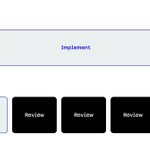
ALT A workflow graph with 11 stages, all at 0 runs. Jira, Linear and Slack icons feed a Start stage orchestrated by "foreman", which leads to "intake" and then "task-worker". Task-worker is a group of 4 nested stages orchestrated by "worker": triage, spec, implement and review, between its own Start and End. Implement and review loop back and forth. Task-worker then goes to "handoff" and then to End. GitHub icons mark several links, including a path from intake directly to End. A side panel lists all 11 stages and 19 transitions, such as "Start → task-worker" and "intake → End".

If coding agents are becoming part of how your company builds software, their setup shouldn’t live in someone’s head, or even on an individual's laptop.
Define the agents, their roles, their skills, their triggers, and their workflow in shared code.
That makes the factory versionable. You can test a change on a branch. You can see what changed. If it makes things worse, you can roll it back.
It also opens up a possibility of agentic self-improvement: an agent can identify a recurring failure and propose a change to the factory definition itself.
The goal isn’t a perfect configuration on day one. It’s a system you can deliberately improve.
Ben Holmes retweeted

I benchmarked whether it was more or less effective and efficient to have different factory stages use their own subagents.
On Warp's setup, the subagent approach was 40% more expensive compared to using a simpler approach, with no meaningful quality gain. This matches the online narrative on subagents, but still it was cool to prove with real data.
Sharing a video around the results and what it looks like to do some factory engineering on our own setup.
There's a whole set of "back office" agent automations that feels under-explored.
- Weekly system architecture reviews
- Daily UI verification to fix missed papercuts
- Daily user feedback triage to implement 1 piece of low-hanging fruit

I built a skill called /ui-sweep for our mobile app to autonomously catch and fix UX papercuts
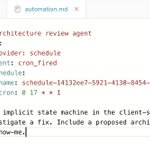
It's set on a cron to run overnight to sweep my entire codebase testing for things like visual flashes, jank or lag, layout shifts, and edge cases with computer use in sandboxed macOS runners.
When it catches something, it'll file Github issues with video and screenshot evidence (like the one attached) and reports back to Slack. Once the issue is filed, I have another trigger set up so that the factory picks it up and puts up a PR attached to the issue!

5
32
2,534
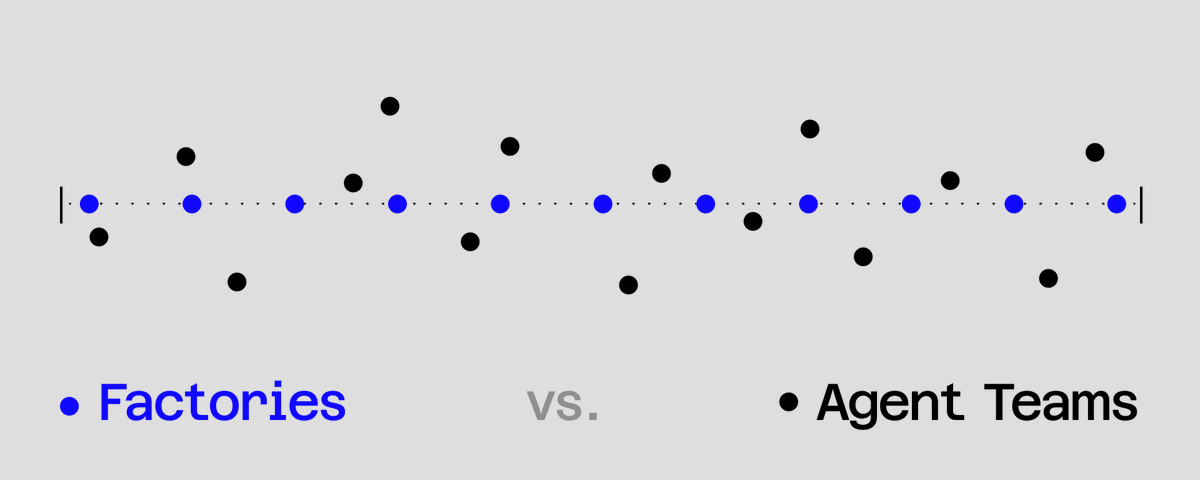
I think agent teams make sense for ambiguous and personal work. But to hand off to writing code on your team's codebase, you'll want to have a software factory.
Main reason: to measure and improve code as a team, instead of every engineer having their own coding setup
Ben Holmes retweeted
Many things are being called software factories right now: agent swarms, shared skills, collections of automations.
Those can be useful. But they aren’t what I mean by a software factory.
I mean a code-defined, closed-loop system for running coding agents, measuring how they perform, and improving them over time.
As @dexhorthy says, declarative beats imperative, so define your system in code and then you can test, measure, and improve it over time.
There are two types of engineering now: product engineering and factory engineering.
Product engineering: building the product itself. This is the “planning” piece – deciding what needs to exist and how it should be architected.
Factory engineering: building the system of agents that builds the product. This is what you might call a “software factory,” hence factory engineering. This optimizes the “implementation” and “review” pieces through automation. That doesn’t mean full automation, though; it means automating low-risk work and only requiring human attention when absolutely necessary.
Great skill. A bit prescriptive for my tastes, but I’ve started asking agents to “talk to me using the Socratic method” whenever I’m researching a new topic

This skill is really fun and useful. Excellent way to learn things with an agent. skills.sh/janestreet/agent_s…

I love this article, because it puts automation in simple terms.
- State the goal
- Outline your process today, the more context the better
- Design the automation with access to your tools
- Connect signals (customer feedback, time to PR, etc) to let the agent improve itself


Ben Holmes retweeted

I think a lot of people aren't using Grok Bot to its full potential, because knowing how to automate things is actually quite a difficult skill to learn. I wrote this post to break down how I approach automating anything with Grok Bot!
Ben Holmes retweeted
Factories should be declarative code that you can version, measure and test.
I enjoyed giving this keynote on how software engineering is becoming factory engineering at AIE Code - thanks for having me @aiDotEngineer!

You version your code. What about the system writing it?
@zachlloydtweets of @warpdotdev on factories as code, recorded agent runs, evals on your own data, and improvements shipped as PRs.
From AI Engineer Code Summit.
Watch: youtu.be/0LeT996Hz3E

Really great talk on how AI can help devs learn and visualize their code. Worth bookmarking!
Vibe coding a game is fun until you don't know what your own characters do.
@trq212 on keeping creative control as models get better: readable specs, custom languages, and a software renaissance.
The Sweet Side of the Bitter Lesson.
Watch: youtu.be/xRJMiaUoD_8

Ben Holmes retweeted

You version your code. What about the system writing it?
@zachlloydtweets of @warpdotdev on factories as code, recorded agent runs, evals on your own data, and improvements shipped as PRs.
From AI Engineer Code Summit.
Watch: youtu.be/0LeT996Hz3E
Ben Holmes retweeted

Lock in for only 30 mins today and learn how to build a Software Factory.
Found it helpful even though I'm already building software factories.
Great job @BHolmesDev 👏🏽

Introducing Warp Learn: A free, hands-on course on how to build a software factory of your own, taught by @BHolmesDev
Start with the fundamentals, write your first automation loop, and build up to a full software factory with specs, risk assessment, and end-to-end verification.
It feels like software engineering got replaced with... 20% management and 80% code review this year.
If you think engineering is just implementation, this is accurate. But that's not all there is to engineering! There's so much on the systems design side, the factory engineering, that's worth solving now:
- Planning: When should the agent involve humans to draft a plan or proceed with implementation? What questions should it ask? What goes into a good product or technical spec?
- Implementation: Now that agents are writing code, how do we optimize the cost and quality of that code? What access permissions do agents have across secrets, MCPs, and skills?
- Review: How do we give agents the tools to verify their own work end-to-end before tagging us for review? How can agents assess the risk of a PR and include that assessment in the pull request to save humans time?
These are some of the most important problems for engineers to solve this next year.

Ben Holmes retweeted

Software engineering is becoming factory engineering. So, we built a course about it.
Start with the fundamentals, write your first automation loop, and build up to a full software factory with specs, risk assessment, and end-to-end verification.

If you've been planning to build a software factory, bookmark this! Very proud of how the course came together:
Our team put together a great hands on introduction course for learning about and building your own software factory. For folks who are interested in getting hands-on with factories I highly recommend it: warp.dev/learn

Ben Holmes retweeted
Our team put together a great hands on introduction course for learning about and building your own software factory. For folks who are interested in getting hands-on with factories I highly recommend it: warp.dev/learn
Ben Holmes retweeted
After two years of rapid change in software development, we are again at a crossroads, with two competing visions for what the future might hold.
Vision one is software factories (e.g. Warp Factories), code-defined, closed-loop systems for continuously measuring and improving cloud coding agents. Software factories are developer infrastructure. Platform teams do “factory engineering” on them to optimize development across an entire product, getting the most productivity from agents while minimizing cost and improving quality. It’s a system design mindset for deploying agents.
Vision two is agent teams (e.g. Devin Bots). In this approach, individuals manage agents to orchestrate complex tasks. For example, you might have a “chief of staff” agent and ask that agent to do a coding project. It decomposes the project into subtasks that different agents take on (e.g. a designer, an implementer), reports on progress, and eventually ships. These teams can also have “always on” agents that proactively fix things, respond to events, and so on. Unlike with software factories, the user experience is more about “managing” agents, akin to how you might manage a person or a team.
Which one is better depends on how you conceive of the problem.
I view the problem as: how do you securely deploy coding agents to maximize product throughput and quality, while minimizing cost? I believe this is what businesses care about – there is this magical new technology for building software at scale and they want to make sure they are using it to get the biggest possible competitive advantage.
Put simply: this is an optimization problem. We have a new engineering primitive, the coding agent, and we want to use that primitive as well as we can.
Framing it in terms of optimization immediately leads to a need for measurement; after all, you can only optimize what you can measure. In order to get to measurement, you need reliable, standardized data. In order to get data, you need some amount of centralization and standardization, otherwise that data would be too noisy and heterogenous to do anything with. In order to centralize, you need to move to the cloud and define what a factory is in code. Your factory needs to be open and flexible so you have degrees of freedom for testing different models, harnesses and skills. You need ways of experimenting to see if different configurations perform better. And then you need to be able to feed those learnings back into the system, so it improves over time.
When you frame the problem clearly, the shape of the solution becomes much more obvious. Compared to agent teams, the factory engineering approach is much better suited to solving the optimization problem because it puts measurement, repeatability, and standardization at the center. It allows for a principled approach to improvement in the long run that is missing with agent teams. You want your factory to scale like an engineered system, not like an increasingly large organization (don’t make your agents work in a big company!).
The engineering approach is possible precisely because agents are not people; for the first time in the history of software development we can directly measure, grade and improve how code and products are shipped. We shouldn’t waste this opportunity by anthropomorphizing the technology and treating it like a teammate.
Also, wouldn’t you rather engineer an agent system than manage a team of agents? I’ve been both a builder and a manager for most of my career. You can guess which I prefer.