

Cardio-Immunologist, Macrophages. Associate Prof, Univ of Toronto. UHN. Research Director Peter Munk Cardiac Center. Loretta Rogers Chair. #Cardioimmunology
Toronto, Ontario
Joined October 2013
- Tweets2.6K
- Following609
- Followers1.5K
- Likes3K




Pinned Tweet
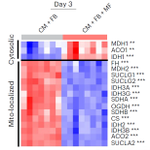
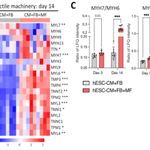
Our latest study, led by @Homaira_H. Hard to study #macrophages (MFs) in early human heart development (no tissue). Homaira integrated human ES-derived-MFs into beating cardiac microtissues & improved🫀function. rdcu.be/dHbj0. #cardioimmunology #regeneration.

Slava Epelman retweeted

A new preprint from @xingjchen7, @JianShuLab, and colleagues at @MassGeneralNews, @harvardmed, and @MIT describes an AI model that reads routine tissue slides, the kind pathologists already make, and predicts which genes are active where, then reconstructs those patterns across three dimensions.
The team trained on a corpus of 300 million single-cell and spatial transcriptomic profiles alongside thousands of tissue sections, including 1,782 sections from aging mouse organs and serially sectioned human skin spanning five decades. The resulting model, GenVinci, maps cellular senescence—a state where cells stop dividing but stay metabolically active and can drive inflammation—across 85.8 million cells without needing retraining on new tissue types.
One finding links specific skin cell types to atopic dermatitis and keratinocyte carcinomas through differences in p16 and p21 expression, two proteins that enforce the senescent state. Validation is so far concentrated in mouse aging and human skin, so how well this generalizes to other organs and diseases is still open.
doi.org/10.64898/2026.11.17.…

Slava Epelman retweeted

A unique study of ~7,000 digital brain twins integrates how environmental exposure factors link to brain function, finding soil and water quality, air pollution, and democratic conditions as consistent indicators @natBME

Biophysical brain twins are personalized computational models built from real individual brains. By modeling each brain, we explored why people of the same age or with the same dementia diagnosis can show different brain activity patterns and whether the exposome might help explain that variation. In @natBME, we used 6,986 fMRIs across 16 countries and ran 3+ million simulations (nature.com/articles/s41551-0…). The twins captured differences linked to age, sex, and neurodegeneration (MCI, Alzheimer’s disease, and frontotemporal dementia) and linked brain dynamics to 68 exposome factors (social: socioeconomic status, migration, democracy; physical: air pollution, green spaces, temperature, precipitation/drought, soil/water quality, climate disasters). Aging was linked to a shift toward inhibition and lower entropy. Sex differences were most evident in inhibitory firing rates and entropy. Disease diagnoses & the exposome were associated with distinct combinations of firing rates, and excitatory/inhibitory entropy & balance. Our twins are openly available for in silico exploration of environmental or pharmacological interventions. Congrats to @rherzoga & all our co-authors! @AgustinaLegaz @josecruzat @HernHdezL @NiltonCustodio8 @Jescab01_ @linazapatamd @joaquin_migeot

Slava Epelman retweeted
Predicting heart attack and stroke events in over 110,000 healthy people up to 3 decades in advance
jamanetwork.com/journals/jam…

Slava Epelman retweeted
We've relied on doing a heart biopsy for decades to make important diagnoses. Now there may be a non-invasive blood test (liquid biopsy) that can do that! @CellCellPress today @SaumyaDas_Lab
news.massgeneralbrigham.org/…

Slava Epelman retweeted

Peer review can be kind. 🙏
We just got the reviews back on the revision of our single cell foundation model scConcept, and one reviewer kindly mentioned that their lab had started using scConcept since the first round, and that for their applications it clearly outperforms all the other existing models.
This made my day. It also reminded me what reviewing at its best looks like: assume the authors are trying to do good science, engage with the work, and help it get better wherever you can. I want to keep this in mind the next time I review.
And since the model is open for anyone to try: scConcept learns cell representations through contrastive pretraining instead of reconstruction, which makes it work across sequencing technologies. The newest checkpoint from our lab has 170M parameters and was trained on 360 million cells from 16 species. A lighter 30M model, trained on 40 million human cells, is the default for everyday embedding.
Both are on Hugging Face. Congratulations to Mojtaba Bahrami and the whole team!
🤗 huggingface.co/theislab/scCo…
📄 biorxiv.org/content/10.1101/…
#SingleCell #FoundationModels #PeerReview

Slava Epelman retweeted

The CARDINAL project, with 4 preprints released yesterday, is a massive initiative involving single-cell profiling of peripheral blood mononuclear cells from >6,000 individuals across UK Biobank and Genes & Health.
Across the 4 studies, single-cell profiles are linked to:
👉 genetic variation
👉 aging, sex, adiposity, and smoking
👉 diseases and clinical phenotypes
In terms of donor-level scale and integration with demographic, clinical, and phenotypic data, it represents one of the largest single-cell resources of its kind, with a lot to learn from.

Slava Epelman retweeted

Our CellularAI algorithm won @arcinstitute’s Virtual Cell Challenge! 🏆🧬 Here’s how we built a method to predict cellular responses to perturbations in unseen cell lines. 🧵👇

Slava Epelman retweeted

We are hiring! The Ardehali lab at
@UAZHeart and @UAZMedTucson is hiring postdocs and technicians. Our research focuses on metabolism, Immunology, iron biology and cardiovascular disease. Qualified applicants can contact me directly.

Slava Epelman retweeted

Our new article in Nature Metabolism - Multi-workflow plasma proteomics in 161 clamped people gives most comprehensive signature of insulin resistance. A 13-protein model of insulin sensitivity predicts T2D & cardiometabolic disease in UK Biobank. doi.org/10.1038/s42255-026-0…

Slava Epelman retweeted

In ACS Nano: a ligand-free lipid–mineral nanoparticle delivers siRNA to peripheral myeloid cells — silencing TREM1 eased neuroinflammation in Alzheimer's mice. @UHN's Gang Zheng lab at @pmcancercentre contributed to the work. doi.org/10.1021/acsnano.6c10…

Slava Epelman retweeted

Congratulations to the 15 @UHN Principal Investigators named on @ClarivateAG’s #HighlyCited2026 list, recognizing researchers whose work has been highly cited by their peers over the past decade.
Their research spans cancer and drug discovery, heart and kidney disease, critical care, Parkinson disease, and mental health, including new therapies, biomarkers, brain stimulation, focused ultrasound, and precision medicine.
Four UHN researchers also received the Cross-Field distinction for research with influence across multiple fields.
🔗 Learn more about the researchers and their work: uhnresearch.ca/news/11-18-20…

Slava Epelman retweeted

Exciting new work led by Sarah Urbut (@tigerstatdoc) in the growing longitudinal EHR methods family -- now unifying polygenic and monogenic paradigms.


Our preprint led by @tigerstatdoc & @SashaGusevPosts enabling refined risk stratification for those with strong monogenic or polygenic predispositions modeling age-dependent effects & longitudinal EHRs medrxiv.org/content/10.64898… @medrxivpreprint

Slava Epelman retweeted

PFAS are a group of more than 14,000 compounds that manufacturers began using in the 1940s. They’re designed to be strong and long-lasting thanks to their carbon-fluorine chemical bonds.
These chemicals were created with good intentions — to keep people safe, offer convenience, and toughen up products to resist heat, oil, stains, grease and water.
We interact with forever chemicals through a long list of everyday products, including:
Nonstick cookware
Waterproof clothing
Cosmetics and personal care products
Food packaging
Stain-resistant carpets, rugs and furniture
Collected data suggests that forever chemicals can bring harmful health effects. But how much these environmental toxins impact your health varies depending on:
-How much and how often you’re exposed
-Your age, sex, ethnicity, health and genetics
Nothing in medicine ever happens by itself. Exposure to these chemicals is probably not the only reason you develop a chronic disease, but it can contribute.
You may be exposed to forever chemicals when you:
-Use products that contain PFAS
-Eat food packaged in PFAS-treated material
-Drink contaminated water
-Eat fish from contaminated water
-Eat food grown near factories making or using PFAS
-Use cosmetics and healthcare products packaged in PFAS-treated containers
Repeated or high exposure to PFAS chemicals can cause them to build up in your blood. Today, nearly all people in the U.S. have a detectable level of PFAS in their blood. High levels may lead to health issues such as:
-Increased cancer risk
-Slowed development in children
-Reduced immune function
-Reproductive challenges
-Thyroid issues

Slava Epelman retweeted

Heart failure doesn’t only affect the heart. 🫀🧠
New in JACC: Advances - people with heart failure in Ontario had a higher risk of dementia, with frailty and past stroke as key predictors.
Congrats to Paul Tieu, Dr. Douglas Lee & the UNEARTH CVD team!
jacc.org/doi/10.1016/j.jacad…

Slava Epelman retweeted

Brain border-associated macrophages rhythmically scavenge amyloid-beta and regulate vascular amyloid pathology. @ImmunityCP cell.com/immunity/fulltext/S…

Slava Epelman retweeted
Discovery of a liver-heart axis.
Prior liver injury-> heart attack risk
How the immune system transmits inter-organ impact
cell.com/cell-metabolism/ful…

Slava Epelman retweeted

Blake et al found multi-omic profiling of progressive #RV dysfunction nominates ribotoxic stress response, ineffective macrophage #efferocytosis, & suppression of the mitochondrial #UPR as druggable drivers ahajrnls.org/3US5yly
@jenna_mendelson @kurt_prins

Slava Epelman retweeted

Our new paper, “Simply Aging,” is out in @PNASNews!
What is aging, when does it begin, how do we measure it, and what would it take to extend lifespan? We tackle these questions directly and simply.
📄 Read: pnas.org/doi/10.1073/pnas.26…
💬 Discuss: simplyaging.xyz/

Slava Epelman retweeted
There still in no approved or highly effective treatment for postural orthostatic tachycardia syndrome (POTS), which can be debilitating.
Now there's hope with very encouraging results of a Phase 2 randomized trial: an antibody vs natriuretic peptide receptor 1 (NRP-1)
firstwordpharma.com/story/84…

Slava Epelman retweeted

instagram.com/p/DfsD12SFWks/…
Thanks to @A_Gramolini for this amazing collaboration.
@PMunkCardiacCtr @UHN @bradwouters @UHNTransplant @TBEP_UofT @trogersresearch
