

Making drone engineering understandable. Open-source flight tech, build guides, and new hardware. Join the community and build with us!
US
Joined October 2026
- Tweets34
- Following1
- Followers4
- Likes0


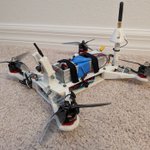
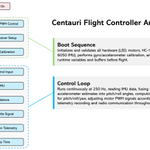
I've put together a step-by-step guide to building the Centauri quadcopter! 3D-print the frame, solder the electronics, and assemble a drone with a @micropython flight controller.
Build along: fullstackflight.com/posts/qu…

Radio communication can be hard to troubleshoot when you can't see what's arriving. Link gives that part of the build its own diagnostic tool.
Explore the build: github.com/TimHanewich/centa…
#FullStackFlight
3
Link is also a build of its own: a carrier board, battery, display, radio electronics, and a 3D-printed enclosure.
It's a chance to practice soldering and hardware assembly while making a tool you can use to test the rest of the system! 🙂
4/5

1
8
Leave the transmitter in place and carry Link farther away, checking whether messages still arrive.
That ground test helps you investigate reception at different distances. It's an approximate check under those conditions, not a guaranteed flight range.
3/5

1
3
Link is a separate device from the transmitter and drone.
It passively listens to their radio communications, giving you a way to inspect reception without having the aircraft airborne. A small screen puts that information in your hand.
2/5

1
2
Before sending a drone across a field, can you check whether its pilot's radio messages reach the other side?
That's why we built Centauri Link: a handheld device that listens to Centauri's radio traffic.
Part three of our Centauri introduction!
🧵 1/5


Centauri is built for people who want to understand the engineering behind a flying quadcopter.
Explore the airframe, electronics, and firmware: github.com/TimHanewich/centa…
#FullStackFlight
5/5

18
Want to understand how a stick movement changes the motor outputs?
Centauri's @micropython source lets you follow the sensor readings, control calculations, and motor commands. You can study the same code that flies the aircraft in our videos!
4/5

1
15
The pilot sends a command. The motion sensor measures what the drone is doing. The flight controller adjusts the motor outputs to correct the difference.
Centauri repeats that control loop 250 times per second. Those little corrections keep it flying!
3/5

1
15
The airframe is 3D-printed. Inside are the Pico, a motion sensor, a radio, and the electronics that control four brushless motors.
Building it brings several kinds of engineering onto one workbench: mechanical design, wiring, electronics, and software.
2/5

1
27
What keeps a quadcopter balanced while its four motors pull it through the air?
On Centauri, a @Raspberry_Pi Pico runs flight-controller code written in @micropython.
Meet the drone, part two of our introduction to the Centauri ecosystem!
🧵 1/5
Why did we write all of Centauri in Python/MicroPython?
So someone with basic Python can follow how pilot inputs become motor commands, then try changes themselves!
We prioritized readable code and hands-on learning over squeezing out every bit of performance.

With the ground plane attached: 178 METERS!
More than 3x the range in this test, just from adding those wire arms.
This suggests an insufficient ground plane was limiting my antenna setup. Excited to try it on the drone next!

4
First, without the ground plane: packets stopped arriving at about 58 meters.
Link made this easy to check on foot. No need to fly the drone just to find out where reception drops off!
Then back to the transmitter to add the wire...

1
4
For the test, I added the ground plane to the TRANSMITTER antenna, not Link.
The transmitter stayed in place while I walked away with Link, my handheld radio monitor, watching for incoming packets.
One walk without the wire, then one with it.

1
5
I made a simple ground plane: two wire arms, each extending 17.3cm from the center. That's a quarter wavelength at 433.8MHz.
It contacts the antenna connector's ground. Shown here on Link to illustrate how it attaches, not how I tested it.
2/5

1
8
