

G2AI tracks the US-China(G2) AI stack
Joined April 2026
- Tweets519
- Following48
- Followers2.2K
- Likes172






Axelera AI: in talks to raise $400M for AI inference chips
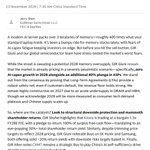
Dutch chipmaker Axelera AI is in talks to raise $400M to expand development of its AI chips, Bloomberg reported, citing people familiar with the matter. It is also seeking hundreds of millions in EU grants through the IPCEI program. No lead investor or valuation has been reported.
The round would be about 1.6x the $250M+ raise in February led by Innovation Industries, with BlackRock and Samsung Catalyst among backers, which took total funding past $450M. Another $400M would push the total toward ~$850M.
Axelera started with the Metis edge-inference chip for cameras, robots and drones, added Europa for generative and agentic workloads, and is now targeting data centres with the Titania chiplet. It said in February it had shipped to its 500th customer.
thenextweb.com/news/axelera-…

1
239
US Commerce / NVIDIA: Megaspeed and an Alibaba Singapore unit added to Entity List
The US Commerce Department added seven Southeast Asian companies to its Entity List, including Singapore-based Megaspeed International, its Malaysian unit Speedmatrix, PT Megaspeed International, MSFusion and Megaspeed (Thailand). The filing cites a significant risk of diverting advanced computing products to unauthorized end users. Licenses are now required for all items subject to US export rules, reviewed under a presumption of denial.
Commerce also listed Apex Enterprise Solutions, an Alibaba subsidiary in Singapore, according to Reuters. Alibaba says Apex never diverted controlled chips and it will pursue all legal avenues.
Commerce opened its Megaspeed probe in 2024. Nvidia put the firm on its no-sell list in June 2025, and the Justice Department now leads a criminal case. Singapore PM Lawrence Wong said Singapore's own investigation is ongoing.
cnbc.com/2026/11/24/us-adds-…

308

SpaceX AI: Renting compute to Anthropic and Google is now more than half of its revenue
SpaceX's AI unit (formerly xAI) now earns more than half of its revenue from renting compute to rivals, the New York Times reports. Anthropic is the biggest customer at roughly $3.1 billion a month. Google pays about $800 million a month. The deals can run through 2029, but either side can cancel with 90 days' notice.
Insiders say the unit had to finish new data centers by October to fill Anthropic's orders, and Musk says Anthropic wants to rent even more. In August Musk pushed engineers on "revenue per GPU" and reportedly renamed an internal chat "Sell compute because we can't compete."
The unit is cutting its own projects to free up capacity. The 60-person Grok Imagine image and video team is being disbanded, after AI avatars were shut down in September.
the-decoder.com/anthropics-a…

Amazon: Buys Decart's AI chip optimization stack in deal worth about $7.5B
Amazon signed an agreement to acquire the technology behind the Decart Optimization Stack (DOS) and bring over Decart co-founders Dean Leitersdorf, Moshe Shalev and Orian Leitersdorf along with their AI research and engineering team. Bloomberg puts the price at $7.5 billion. The deal still needs regulatory clearance.
DOS is software that makes AI training and inference run faster and at higher chip utilization across Nvidia, Amazon and Google hardware. Decart has worked with Amazon on Trainium since 2025.
Amazon has so far used Trainium in its own data centers and is preparing to sell the chips to outside customers as an Nvidia alternative. DOS could make it easier for customers to move workloads onto Amazon silicon.
techcrunch.com/2026/11/23/am…

297
Best News of the Day:
Michael Jordan and Nvidia co-founder Jensen Huang share the exact same birthday: February 17, 1963.


1
571
NVIDIA: Board reinstates Jensen Huang as CEO, stock jumps ~29%
NVIDIA's board voted unanimously to reinstate Jensen Huang as President, CEO and board director, effective immediately. The board said it took input from senior levels of the US government and is confident his return poses no national security risk. Colette Kress goes back to being CFO only, and Harvey Jones stays as chair.
Shares rose about 29% after the announcement, per CNBC. The stock had lost nearly 33% since Huang admitted the affair on Nov 8, and he resigned as CEO on Nov 13.
The independent committee's investigation, with Wachtell Lipton as counsel, will continue to a conclusion. NVIDIA also set up a new National Security and Export Control Committee of independent directors and is hiring its first Chief Compliance Officer.
cnbc.com/2026/11/23/nvidia-j…

268


After speaking with more than 50 investors in Europe and the US over the past two weeks, Nomura found that sentiment toward AI infrastructure had turned markedly more cautious. Investors are concerned that US data center projects planned for 2028 could be delayed and are questioning whether enough AI applications will emerge to support the scale of planned investment. NVIDIA’s CEO resignation and new US rules on remote access to advanced semiconductors have further weighed on sentiment.
Technology upgrades continue to drive optical communications, but investors worry that new capacity could lead to price cuts and have become more cautious about the timing of CPO adoption. PCB and copper-clad laminate (CCL) face similar concerns about slower technology upgrades and the sustainability of price increases. Investors show greater interest in PCB and IC substrates, where supply and demand appear more favorable. Nomura expects Shennan Circuits to benefit from AI PCB demand and domestic substitution of ABF substrates, and sees strong earnings potential for Shengyi Technology and Zhongji Innolight over the next few quarters.
US technology restrictions have increased investor interest in domestic substitutes for GPUs, networking chips, and semiconductor equipment in China. In software, Nomura is positive on Kingdee’s revenue growth and improving profitability. Its investor meetings also showed, however, that investors remain cautious about AI application monetization and a recovery in software demand under current macroeconomic conditions.

JPMorgan views Tesla’s FSD (Supervised) v15 as another step toward scaling its Robotaxi service and as further evidence of its lead in consumer autonomy. JPMorgan maintains a Neutral rating on TSLA.
- Technology: v15 upgrades the vision encoder and uses a shared perception architecture across FSD, Robotaxi, and Optimus. The FSD and Robotaxi neural networks are also becoming more unified.
- Driving experience: A new AI-generated, real-time view shows the planned route and lets users adjust the parking location. Navigation begins to learn route preferences from the vehicle fleet, while parking choices draw on a driver’s history. The report also describes improved detection and handling of potholes, debris, and standing water.
- Safety and hardware: Tesla says v15 delivers an approximately 25-fold improvement over v14 in safety-critical interventions and performs about nine times better than human driving on safety. The report also suggests that improved compute efficiency could reduce the near-term need to upgrade the existing fleet to AI5 hardware.
- Commercialization: Cybercab passenger service has expanded to Dallas, and FSD (Supervised) has been approved in Italy.

325
Firmus: Nvidia-backed AI cloud weighs $1.5B bond after shelving IPO
Firmus Grid, the Nvidia-backed Australian AI company, is considering a bond of about $1.5B as part of a senior and mezzanine debt package of up to $4B, Bloomberg reports. Morgan Stanley is leading. The bond and a separate bank loan would each run 69 months, with the bond yielding around 8%, and Firmus has BBB ratings from at least two agencies.
The size keeps shrinking: two months ago Firmus targeted about $7.5B of debt, and in October it scrapped an IPO meant to raise up to $5.5B. Most of the new money would buy Nvidia GB300s for a data center it is building in Indonesia with DayOne.
Firmus started as a Bitcoin miner in 2019 and has built just 46MW of a 912MW pipeline, per investor documents seen by Bloomberg.
thenextweb.com/news/firmus-1…

NVIDIA / Megaspeed: U.S. confirms probe as WSJ ties Alice Huang associate to key decisions
Director of National Intelligence Jay Clayton said the U.S. is investigating Alice Huang and her former company Megaspeed, the Singapore-based cloud firm that ran data centers in Southeast Asia and joined Nvidia's Cloud Partner Program in Nov 2023. Commerce and Justice say the export-control probe began in 2024; Nvidia put Megaspeed on its "no sell" list in June 2025.
WSJ reports Chinese national Li Ming was "deeply involved" in Megaspeed's activities and major decisions. Li faces five charges in Singapore, including fraud by false representation to Super Micro over servers he said would be held and leased locally; the deals reportedly totaled about $140M. Megaspeed is not named in those charges.
Treasury Secretary Bessent said the administration wants answers from Nvidia on who oversaw compliance on China chip sales. Megaspeed says it is a lawful business and that Huang left in Aug 2025.
cnbc.com/2026/11/23/nvidia-m…

566
Ant Group / Simplexity Robotics: $100M pre-Series A at a $1.6B valuation
Ant Group led a $100M pre-Series A round in Chinese physical-AI and humanoid robot startup Simplexity Robotics, valuing the roughly 16-month-old company at $1.6B. Existing investors Alibaba, Tencent, HongShan and Lanchi Ventures also took part, chairman and co-founder Wang Kai told Bloomberg.
The raise comes as China's humanoid industry pulls ahead of US rivals: Chinese makers accounted for 97% of humanoid robots shipped in the first three quarters of 2026, according to Bloomberg.
runtimewire.com/article/simp…

1
449
Goldman Sachs expects DRAM and HBM to remain in short supply in 2027. It takes a more cautious view of 2028 as consumer electronics demand levels off and Chinese supply expands, but believes current share prices may already reflect a highly pessimistic scenario.
- Demand mix: AI servers require substantial amounts of memory. Growth in server demand could offset some of the weakness in PC and smartphone demand. The report expects the supply shortfall in HBM to be greater than in conventional DRAM.
- Concerns about 2028: Goldman Sachs believes the market is already pricing in a stress scenario of zero growth in AI capital expenditure and a further 40% drop in memory average selling prices. This is its assessment of market pricing, not its base-case forecast.
- Downside protection: The report highlights the role of long-term agreements (LTAs). In its scenario analysis for SK Hynix, revenue would remain 22% higher in 2027 and 49% higher in 2028 than in a scenario without LTAs, even if customers defaulted.
- Company views: Goldman Sachs is positive on Kioxia’s valuation and shareholder returns. It lowered its price targets for SK Hynix and Samsung to reflect its 2028 pricing outlook but maintained Buy ratings on both. It also maintained a Buy rating on CXMT as a way to gain exposure to China’s drive for a more self-reliant AI supply chain, despite near-term pricing pressure.

Goldman Sachs lowered its price target for CXMT but maintained its Buy rating.
CXMT has begun mass production of DDR5, with shipments expected to ramp up. The company is advancing its DDR6 and LPDDR6 technology and expanding into HBM. Goldman Sachs remains optimistic about AI investment in China and demand for domestically produced semiconductors.
However, weak smartphone and PC demand, combined with growing DRAM capacity, may make elevated prices for DDR5, LPDDR and HBM difficult to sustain. Goldman Sachs therefore lowered its product pricing and gross margin assumptions.
It cut its 2027 and 2028 revenue forecasts by 14% and 20%, respectively, and its net income forecasts by 18% and 27%. Its blended gross margin forecasts fell to 81.6% and 76.8%, respectively—3.0 and 6.5 percentage points below its previous estimates.

Anthropic: IPO filing shows gas-fired data centers and uncapped fuel costs
Anthropic's prospectus confirms that some planned data centers will run on dedicated on-site natural gas generation, with fuel costs passed through to Anthropic and no cost caps. Some power and data center deals run 20 years with annual escalators and take-or-pay compute payments that apply regardless of utilization. Anthropic also guaranteed up to $500M of a provider's power-purchase contract.
The filing gives no fuel mix. An outside estimate from the Better Data Center Project puts Anthropic's US contracted data centers at 87% gas and 11% coal in 2028, counting on-site gas and marginal grid supply.
runtimewire.com/article/anth…

1
3
462
Runway: open-weight 27B robot action model Praxis-1
Runway released Praxis-1, a 27.2B-parameter world action model for robots, under Apache 2.0, with weights on Hugging Face and fine-tuning code on GitHub. It is built on Runway's video foundation model: a 26.9B MoE backbone (about 2.8B active per token) plus a ~314M-parameter action expert.
Each call predicts the next chunk of video and 1.6 seconds of robot actions (24 steps at 15 Hz). Runway says the DROID-tuned version ranks #1 among world action models and open-source robot foundation models on NVIDIA's RoboLab-120 leaderboard, with checkpoints for single-arm Franka and bimanual YAM rigs.
The bet is that general video, not costly teleoperation data, can carry most of the pretraining load for robot control.
runway.com/research/praxis-1…

2
376