

AI Architect & Builder - Inference, LLMs, SLMs GSoC Org Admin - Jenkins | Docker Captain | CNCF Ambassador
New Delhi
Joined December 2018
- Tweets7.5K
- Following1.3K
- Followers8.4K
- Likes38.8K


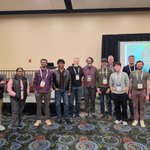



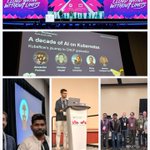


What an amazing day! Presented a poster at @PyTorch Conference: how we optimised the RLM paper with pre-fix caching & batched Sub calls with @vllm_project
And a full house for our Pytorch Conference talk on running LLMs using Executorch on Android!


Shivay Lamba retweeted

btw, this is exactly how i use it to optimize and get to the best possible ideation/research.
> get gemini 4 neon high to do an insane amount of web searches and think from first principles based on research findings, failures, tech blogs, articles, etc. from the last 50–100 years.
> spawn 4 sub-agents with the same model to act as phd-level debaters, push back on each other, and zoom into minute details.
> run every research hypothesis through verification and small hit-and-trial experiments to get quantitative value on what works through profiling.
> run an autoresearch loop on the chosen path to extract as much juice as possible.
works 90% of the time :))

Working in parallel and meeting every four hours to debate ideas, they used formal proof assistant Lean to verify that optimizations were mathematically sound.
We’re open-sourcing our verified solutions & Lean library on GitHub. Find out more → goo.gle/4zHeFnI
Shivay Lamba retweeted

trainium needs good software to be worth buying. we put ours out in the open: github.com/RunanywhereAI/trn…

Shivay Lamba retweeted

We’re introducing Shirudo, an open-source Linux runtime allowing agents to defend systems without downtime. It lets agents write dynamic eBPF controls to shield systems from exploits, giving defenders more time to test and roll out patches. Built by @cisco together with OpenAI.
Shirudo is a first step toward self-defending infrastructure that can adapt to new threats while keeping services running. Our goal is for defenders to work with AI agents to find affected systems, test and share shields, and deploy them without disrupting workloads.
openai.com/index/introducing…

Shivay Lamba retweeted

Today, we're introducing OpenHack v2 - our latest harness + a new web UI.
Last week, OpenHack v2 surpassed Claude Code Security on PentestBench, and we learnt there's still a long way to go for vulnerability scanning for web apps even with known source code.
Shivay Lamba retweeted

Introducing GLM-5.4: Generalized Coding with Our First Loop Transformer.
- Loops existing layers in the GLM-5 base model for deeper reasoning
- Pushes beyond traditional coding to video, games, 3D shaders, and CAD modeling
- Adds vision capabilities for stronger visual coding
API access will open after safety evaluation. Model weights will be released responsibly.
Tech Blog: z.ai/blog/glm-5.4

The problem: in a shared flat nobody owns the shopping. Someone buys the wrong thing, someone forgets an allergy, and one person pays and spends the week chasing everyone else.
What Pantry does:
→ Everyone adds what they need in plain words, whenever they think of it
→ Your own AI agent can join: my roommate used his own Claude, connected to our household over MCP, to
add his items and save "detergent must be fragrance-free"
→ Pantry keeps a shared, private context layer: who needs what, each person's rules (the reason stays
private), and verified product facts
The agent does the whole run by itself. The one thing it won't do alone is spend your money.

6
150
I took part in a hackathon for the first time in a long while, and our team won 🥈 2nd place overall at the Personal Agents Hackathon by @tokensandai in San Francisco!
We built Pantry: a grocery agent for shared homes. Your own AI agent joins the household over MCP, it checks facts, splits the bill to the cent, and only pays when everyone approves.
Built with @cognee_ , @superlinked , @SingleStoreDB, and @nebiustf Token Factory.


Shivay Lamba retweeted

Exa now offers $15,000 in free credits to startups!
Join our Startups program here: exa.ai/startups

Shivay Lamba retweeted
At @argoproj ArgoCon, we showed a canary deploy that fixes itself.
No human ran anything. Argo Rollouts aborted a bad canary, an AI SRE agent figured out why from live cluster state, and it pushed the fix in 112 seconds. Then the same canary gate shipped it 👀
✅ The problem the talk was about
Your SLO alert won't catch a bad canary.
→ The canary was failing 31.25% of requests
→ The service-wide error rate was 0.0196%
→ At 1% of traffic, the canary never moves the service-wide number, so a 1% SLO alert never fires
The canary's own gate catches it, scoped to the canary's pod hash. So I gave the agent that same scoped signal.
✅ The setup
→ Argo CD and Argo Rollouts across two clusters, staging and prod
→ A failed canary sends a notification that wakes the agent
→ The agent gets three MCP servers: Grafana (Prometheus + Loki, read-only), a release ledger and GitHub
→ Its job is to fix the code, not just explain the failure
✅ What happened live
→ Prometheus by pod hash: 31.25% errors on the canary only
→ Loki: only sku-7, sku-8 and sku-9 were failing ("has no 'available' field")
→ It read the PR's commit and the inventory service: for multi-warehouse SKUs, v2 returns stock per warehouse, but the new client only read the top-level field
→ It pushed a fix that sums warehouse stock, plus a test, and commented the evidence on the PR
→ CI rebuilt, and the same gate passed it: 1% → 25% → 50% → 100%
✅ The model: Kimi K3.1 Pro on @nebiustf Token Factory
The reasoning in the loop is Kimi K3.1 Pro, served through Token Factory's OpenAI-compatible API.
→ 28 tool calls in one investigation: 13 Grafana (9 Prometheus, 3 Loki), 2 ledger, 13 GitHub
→ It chose its own queries: by pod hash, by environment and against the release ledger
→ 112s from abort to pushed fix, 128s to the full written report
→ Switching the agent to it meant pointing the agent at the Token Factory endpoint
✅ The takeaway
Give your agent the same scoped signal your deploy gate uses, and let it close the loop. Keep the merge button human.
Full run in the video 👇
Try Kimi K3.1 Pro: github.com/nebius/token-fact…
Yes. It posts a comment on the PR with what happened, the evidence (the Prometheus query by pod hash,
the Loki line for sku-7 and the diff it read) and the fix. All 28 tool calls are logged with their arguments and results. The reviewer sees the why before merging.
1
17
It reran the same traffic mix that triggered the abort, so sku-7/8/9 were hit again at 1%. The gate went green on the same pod-hash metric that failed. The fix also shipped with a unit test for the multi-warehouse case (20 + 25 = 45). Your idea of explicitly replaying the failing requests before traffic grows is a good one, and I'll add it.
9