

Lead center for the @Space_Station and Orion spacecraft. Home to Mission Control and the nation's astronaut corps. 🚀 https://www.teapaw.org/t.co/7u1SQekfru
- Tweets21.3K
- Following169
- Followers2.3M
- Likes11.2K
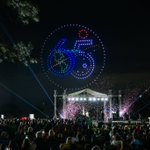





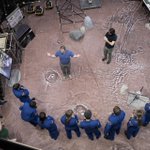


ALT Employees and guests of NASA’s Johnson Space Center celebrate the center’s 65th anniversary at the Lunar Receiving Park in Houston on Nov. 19, 2026. Credit: NASA/Robert Markowitz


ALT Artist’s concept of a fission power system on the Moon. Credit: NASA

ALT A SpaceX Dragon spacecraft approaches the International Space Station carrying more than 6,300 pounds of science and supplies for the Expedition 75 crew on Oct. 15, 2026.




ALT From re-entering Earth to the first moments after splashdown, NASA photographers James Blair and Josh Valcarcel take us behind the lens of Artemis II’s historic return. Hear their story on this week’s #HWHAP! ️ Credit: NASA

ALT The International Space Station Flight Control Room at Johnson Space Center in Houston, Texas, paused to pay homage to the Voyager 1 spacecraft as it reached one light day from Earth. Photo: NASA/James Blair

ALT The International Space Station Flight Control Room at Johnson Space Center in Houston, Texas, paused to pay homage to the Voyager 1 spacecraft as it reached one light day from Earth. Photo: NASA/James Blair


ALT The white clouds and blue seas of Earth, as seen from space, fill the top half of this image. Parts of the International Space Station, including cylindrical modules and rectangular solar panels, can be seen at the bottom.

ALT Astronaut Anil Menon, wearing a dark shirt on the International Space Station, holds up a tablet with "Hello, Reddit! I'll join an AMA live from space. Nov. 19, r/space" written on it. Behind him, a circular window looks out into space.

ALT A photo showing Saturn's B and C rings captured during the Voyager mission. The C-ring is most prominent, appearing as ribbed arcs of blue and white. The B-ring lines the top and left edges of the scene, appearing as a hazy band of gold.

ALT The Empire State Building is seen illuminated in gold to celebrate NASA's Voyager 1 spacecraft as it is about to pass one light-day away from Earth, a distance reached by no other human-made object, Tuesday, Nov. 17, 2026, in New York City. The color gold is emblematic of the gold-plated copper phonograph record that is flying on Voyager. The record contains sounds and images selected to portray the diversity of life and culture on Earth. Photo Credit: (NASA/Bill Ingalls)


ALT Illustration of NASA’s Voyager spacecraft traveling through deep space above large gold text reading “ONE LIGHT DAY.” A bright red, orange, and yellow signal beam extends from the spacecraft toward the foreground, symbolizing Voyager’s radio signal reaching a distance of one light-day from Earth. The background is a dark star field with subtle light flares and cosmic details.


ALT NASA astronaut Chris Williams poses for a photo in front of a T-38 jet at Ellington Field in Houston, Texas. Credit: NASA/Robert Markowitz

ALT In support of the Blood Pressure Regulation Experiment (BP Reg), Expedition 35 Commander Chris Hadfield of the Canadian Space Agency is pictured after having set up the Human Research Facility (HRF) PFS (Pulmonary Function System) and the European Physiology Module (EPM) Cardiolab (CDL) Leg/Arm Cuff System (LACS) and conducting the first ever session of this experiment. The test, which will be repeated using other crew members as well, will help to identify the astronauts who could benefit from countermeasures before returning to Earth. Thus, this method has great potential for astronaut health monitoring during future long-term space flights and it also has important implications for testing of individuals on Earth, especially the elderly, who are at risk for fainting. The research will also allow demonstrating the feasibility of obtaining a set of indicators of overall cardiovascular regulation from the non-invasive measurement of continuous blood pressure.

ALT STS-100 and Expedition Two crew members pose for traditional in-flight portrait in Destiny laboratory. Bottom, from left, Chris A. Hadfield, Umberto Guidoni, Kent V. Rominger and Susan J. Helms. Middle row, James S. Voss, Yury V. Usachev and Yuri V. Lonchakov. Top, Scott E. Parazynski, John L. Phillips and Jeffrey S. Ashby. Guidoni represents the European Space Agency (ESA); Lonchakov and Usachev are with Rosaviakosmos and Hadfield is associated with the Canadian Space Agency (CSA).

ALT NASA astronaut and Expedition 75 flight engineer Anil Menon works inside the International Space Station's Kibo laboratory module to remove a scientific payload from Kibo’s airlock that had been exposed to the vacuum of space. Credit: NASA/Jessica Meir

ALT NASA astronaut and Expedition 75 flight engineer Jack Hathaway carries the Advanced Space Experiment Processer-4 (ADSEP-4) and relocates it for installation inside the International Space Station's Destiny laboratory module. ADSEP-4 houses research samples for processing in microgravity, can be launched aboard a SpaceX Dragon or Northrop Grumman's Cygnus XL spacecraft for powered science, and installed in EXPRESS racks aboard the orbital outpost for experimentation. Credit: NASA/Jessica Meir