

For the love of science!
Joined October 2008
- Tweets44.5K
- Following5.3K
- Followers3.1M
- Likes4.5K


🐻🌳
During the late summer months, bears enter a state of hyperphagia. In this time period, bears consume about 20,000 calories in order to bulk up before they go into hibernation.
📸: Zocha K
#bear #brownbear #bearden

Who else is hungry? 🐟
Contrary to popular belief, brown pelicans do not store fish in their beaks. After catching a fish, a pelican drains the water from its beak pouch before swallowing its prey.
1 📸: Joy Pan
2 📸: Hal Beral
#pelicanpouch #pelican #californiabrownpelican


Hummingbirds have a built-in straw! 🌸
A hummingbird's tongue is forked, meaning it has two tongue tips that are tubular and supported by stiff rods. When drinking nectar, the tongue splits and curved lamellae (hairlike structures) unfurl in the liquid. Once the hummingbird retracts its tongue, the lamellae refurl over the supporting rod structures, trapping a tube of nectar inside each tongue tip.
1 📸: Fabian A Gallo
2 📸: Sharon Jones
3 📸: Karl Kern
#hummingbird hummingbirdfunfact #nectar


🐯🦈
Tiger sharks' teeth are one of the reasons they thrive as opportunistic predators in marine ecosystems. Their teeth are specially designed to consume carcasses, often crushing bones and tearing flesh, which helps them hunt successfully.
📸: Stephen Frink
#tigershark #tigersharkteeth #shark

ALT Close-up of a tiger shark underwater, showcasing its distinct striped pattern and sharp teeth.
🐢🥹
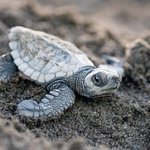
It is estimated that only 1 in every 1,000 sea turtle hatchlings survives to adulthood. The few females that do survive will eventually return to a beach to lay their own eggs. Sometimes they return to the very same beach where they were born.
1 📸: Kryssia Campos
2 📸: Saurabh Chakraborty
3 📸: Samuel J Coe
#turtlehatchlings #turtle #babyturtle #ocean #hatchling

ALT A small sea turtle hatchling rests on a sandy beach, surrounded by textured sand.

ALT A sandy beach at sunrise, scattered with numerous small sea turtles making their way toward the ocean. Waves gently lap at the shore under a soft, pastel sky.

ALT A group of baby sea turtles is crawling across the sand, moving toward the ocean.
Happy hump day! 🐋😉
In late spring, summer, and fall, humpback whales feed as much as possible to pack on weight before their long migration south. Once they reach tropical waters, they live primarily on stored blubber, allowing them to focus on mating and calving.
📸: Daniel Dickman
#humpbackwhale #whale #migration #ocean #whalemigration

Building frequent flyer miles 🪽☁️
Arctic terns chase sunshine. Each year, they fly an estimated 44,000 to 59,000 miles as they migrate between summer in the Arctic and summer in Antarctica.
1 📸: Dieter Meyrl
2 📸: Gestur Gislason
3 📸: Paul Souders
#arctictern #birds #migration #artic #antartica


Meet the ptarmigan 🤍✨
Ptarmigans change the color of their feathers with the seasons, turning white in winter and brown in summer. They also have feather-covered feet that act like natural snowshoes, helping them walk across snow and stay warm in Arctic conditions.
1 📸: Jeremy D Clark
2 📸: Jayanta Bordoloi
3 📸: DmitryND
4 📸: Patrick J. Endres
#ptarmigan #bird #winter


