Science Magazine (@ScienceMagazine) header
Science Magazine (@ScienceMagazine) profile picture

Cutting-edge research, news, commentary, and visuals from the Science family of journals. Follow @NewsfromScience for stories from our News team.

Washington, DC & Cambridge, UK
Joined April 2009
Photo by Science Magazine (@ScienceMagazine)Photo by Science Magazine (@ScienceMagazine)Photo by Science Magazine (@ScienceMagazine)Photo by Science Magazine (@ScienceMagazine)Photo by Science Magazine (@ScienceMagazine)Photo by Science Magazine (@ScienceMagazine)Photo by Science Magazine (@ScienceMagazine)Photo by Science Magazine (@ScienceMagazine)Photo by Science Magazine (@ScienceMagazine)Photo by Science Magazine (@ScienceMagazine)
Quantum systems have “strange” features that are key to quantum algorithms. Researchers have highlighted the benefits of quantum contextuality by playing a game that is impossible to always win using classical resources alone. By executing a sequence of measurements on a (superconducting) quantum processor, they achieved results that defy classical limits. Learn more this week in Science: scim.ag/3V13vvx
14
15
5
102
175,838
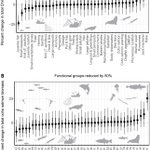
When it comes to helping depleted Pacific salmon populations recover, widespread culling of marine predators may do more harm than good, as removing these predators could trigger food-web changes that offset any direct benefits for salmon, according to a new study in Science. The findings come amid greater calls for control of marine mammal predators. scim.ag/48u33sZ
4
7
44
9,288
In the new book The Sea-King and the Sorceress: Life and Death in the Viking Age, archaeologist Neil Price "develops a fascinating new take on life in the Viking Age, reconstructing an unexpectedly diverse society through a series of burials." Read the #ScienceBooks Review: scim.ag/4fjLaRp
3
26
10,487
A noninvasive brain stimulation technique called tTIS can modulate reward learning circuits in the brain and safely relieves symptoms of subclinical #depression in adults, according to new results from a clinical trial in @ScienceTM. scim.ag/4zwOkZg
10
22
1
115
16,763
The United States, “measles-free” since 2000, has lost that designation. The U.S. resurgence is only one in a series of global setbacks in the fight against the virus, as vaccination rates have fallen because of funding cuts, political strife, and increased vaccine hesitancy. Mexico and Bolivia also lost their measles-free status this week; Canada lost the designation in 2025, and six European countries earlier this year. The virus has also surged in several lower income countries, where malnutrition and limited health care put children at a much higher risk of dying from it. Learn more: scim.ag/4zPUrs5 @NewsfromScience
12
21
8
83
20,588
The folate receptor FOLR1 sustains cancer stemness and resistance to anti-PD-1 #immunotherapy in #ColorectalCancer, but can be targeted with an approved antibody-drug conjugate to resensitize tumors to anti-PD-1 blockade in mice. @ScienceTM scim.ag/4ePVksS
5
22
1
123
16,238
Researchers in @ScienceAdvances have discovered a supergene that creates wingless, worker-like queen ants that are still capable of reproduction. scim.ag/4AQ1925
3
17
3
94
21,665
Early-life stress may prime the brain for chronic pain and anxiety later in life, particularly in women, according to a new Science study in mice. A neural pathway between two brain regions involved in pain and fear appears to drive this heightened sensitivity, the study’s authors report, and understanding this pathway could represent a therapeutic target for addressing chronic pain and anxiety in women with a history of childhood adversity. Learn more: scim.ag/4thHNAo
15
69
4
298
30,139
A 1.29-gram flapping-wing robot landed like an insect pollinator on a sunflower, with the help of integrated onboard sensing and computation and a hierarchical controller that human operators used to direct robot motion. Read more in @SciRobotics: scim.ag/4jufOKg
13
7
59
13,308
While Indonesia’s pulp industry has dramatically reduced deforestation through coordinated conservation efforts, a new wave of industrial expansion threatens to reverse those gains, revealing how difficult it can be to sustain such progress. In a new #SciencePolicyArticle, researchers warn that growing demand for pulpwood, weakening environmental protections, and gaps in corporate accountability could put hundreds of thousands of hectares of forests and peatlands at risk in Indonesia. scim.ag/4zAO1Nh
1
17
34
12,777
Tinnitus—a constant ringing or buzzing in the ears that affects about 15% of people—is difficult to understand and even harder to treat. In 2020, scientists found that shocking the tongue—combined with a carefully designed sound program—can reduce symptoms of the disorder, not just while patients are being treated, but up to 1 year later. Learn more: scim.ag/474VmsH #ScienceMagArchives
8
23
4
160
24,134
An examination of interplanetary dust particles supports the longstanding but hard-to-prove theory that the Kuiper Belt is home to a reservoir of water that's rich in "heavy" oxygen. Learn more in @ScienceAdvances: scim.ag/4AsC1Oq
2
14
2
74
16,266
The Normals, a special series from the #SciencePodcast🎙️, won Silver at the @signalawards this year. In a new #ScienceVisualsBlog, Kevin McLean, Multimedia Managing Producer at Science, writes about the three-part series: scim.ag/4zrNgWJ
2
5
1
32
14,643
The traditional Inca chronology has collapsed. New radiocarbon dates show the empire lasted longer than was previously thought—and met more resistance. Learn more: scim.ag/3VB7gZ1 @NewsfromScience
15
304
10
958
57,847
It would be pretty easy to guess that Garfield was a tomcat even if you didn’t know his name—or didn’t want to peek under his tail. Most orange cats are boys, a quirk of feline genetics that also explains why almost all calicos and tortoiseshells are girls. Scientists curious about those sex differences—or perhaps just cat lovers—have spent more than 60 years unsuccessfully seeking the gene that causes orange fur and the striking patchwork of colors in calicos and tortoiseshells. In 2024, two teams independently found the long-awaited mutation and discovered a protein that influences hair color in a way never seen before in any animal. Learn more: scim.ag/3UG1xkn #ScienceMagArchives
33
263
36
1,111
73,669
Extracellular vesicle budding is a vital cellular process that allows cells to communicate with each other and the microenvironment. Release of vesicles to the extracellular space can occur through an internal pathway, whereby vesiclecontaining compartments fuse with the plasma membrane to release vesicles called exosomes, or by vesicle budding directly from the cell surface. The latter occurs even at the surface of a primary cilium, a tiny antenna-like organelle that projects from the surface of most vertebrate cells. Although it makes up less than a thousandth of the plasma membrane, the cilium is a major signaling hub. In a new Science study, researchers report that cilial budding does not rely on a complex machinery generally harnessed for extracellular vesicle formation but on the condensation of a single component of this machinery that drives the concentration of cargo and the release of vesicles from this structure. Learn more in this #SciencePerspective: scim.ag/4eGrrv7
7
41
3
193
23,730
Science Magazine retweeted
After more than 150 years of fascinating and torturing mathematicians, the most formidable problem in all of math may have finally fallen. Today, Levent Alpöge, a mathematician at the #AI company Anthropic, posted a four-page paper on his personal website. “I believe I have, working with Claude, discovered a proof of the Riemann Hypothesis,” he wrote. Alpöge has not released the AI-generated explanation of the proof, which he says runs over 250,000 pages. But he provided 17 million lines of code that formally verify a broad version of the conjecture, called the generalized Riemann hypothesis, which extends Bernhard Riemann’s prediction about prime numbers to a wider family of mathematical functions. Many mathematicians say they think Alpöge’s Riemann proof will hold up to scrutiny—and predict it will have far-reaching implications. What’s far less clear is when—and if—mathematicians will manage to glean any understanding from the messy heap of code, which is larger than some entire computer operating systems. Learn more: scim.ag/48AufpZ
26
64
17
235
24,518
Your favorite chatbot may one day run not on silicon microchips, but on real human neurons. Both systems use electricity to compute, transforming inputs into outputs, but neurons—for reasons that are not fully understood—are orders of magnitude more efficient than semiconductor chips. They also require orders of magnitude less energy—not to mention fewer rare earth minerals, no vulnerable supply chains, and negligible water for cooling. Those advantages have some scientists thinking the data center of the future might sit in a lab dish, leveraging the natural computing abilities of organoids—miniature models of the brain grown from stem cells—or other brain cell configurations. Learn more: scim.ag/4t6pNZs @NewsfromScience
15
51
14
234
27,977
A new flossing device harvests and analyzes the information-rich fluid that lurks between tooth and gum. Learn more in @ScienceAdvances: scim.ag/3XE89k4
9
12
2
100
28,868
Researchers have generated a comprehensive dataset that may help delineate the therapeutic properties and side effects of immune-regulating compounds called type I interferons that can treat diseases. @SciSignal scim.ag/4eBv0CM
10
27
157
30,986
Science Magazine retweeted
Our de novo phosphatase is now published in @ScienceMagazine In zero-shot, we designed a promiscuous metalloenzyme with activity comparable to natural enzymes. Our design was made without a pre-specified motif, establishing the design of a de novo active site too science.org/doi/10.1126/scie…
16
76
4
359
30,493