

Starcloud is building data centers in space, to address the AI energy need. We recently launched the first H100 to space. White paper at https://www.teapaw.org/t.co/G8SoHyqcAy
Redmond, WA
Joined February 2024
- Tweets2.7K
- Following163
- Followers25.9K
- Likes7.6K





Pinned Tweet
Thanks @YCombinator for documenting @Starcloud_Inc1’s journey to launching the first @Nvidia H100 in space 🙏 Check it out below! 🎥🤓

Starcloud (@Starcloud_Inc1) recently made history by launching a satellite with an NVIDIA H100 into orbit — the first time a GPU that powerful has ever operated in space. It's the first step toward building AI data centers in orbit, powered by continuous sunlight and cooled by radiating heat into deep space.
Their approach could one day rival the world's biggest data centers while using less energy, zero fresh water, and far lower emissions.
YC's @aaron_epstein visited Starcloud's HQ, where co-founders @philipjohnston, @EzraFeilden, and @Adi_Oltean explained how they built a working prototype in just 15 months — and why big tech is racing to space for AI compute.


Starcloud retweeted
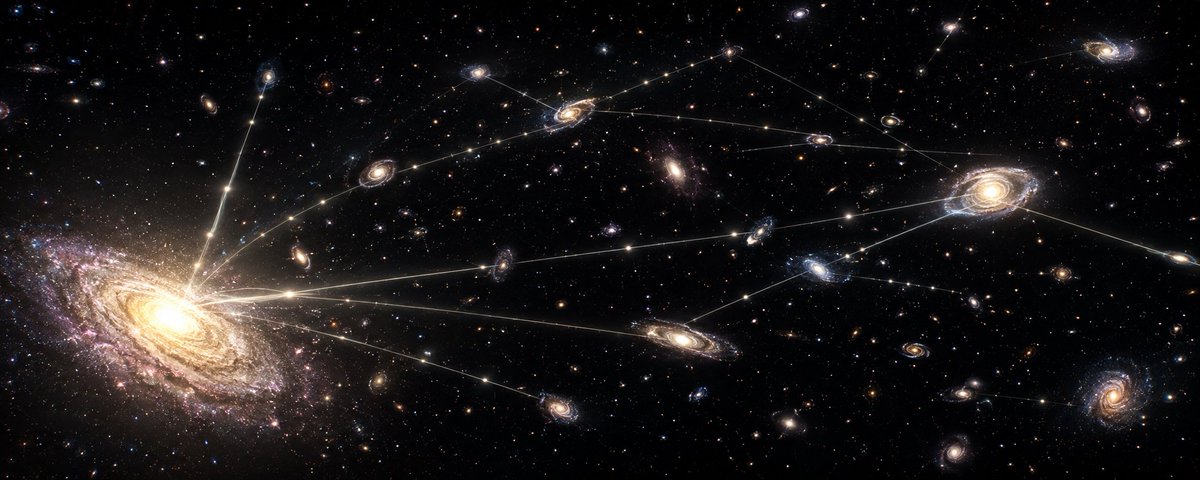
80k years is the blink of an eye! @FermiExplorer 🚀


Starcloud retweeted

Great to have you back @JensenHuang . There is so much important work to do and we are really just getting started.

NVIDIA Board reinstates Jensen Huang as President, CEO and Board Director.
Read the release: nvidianews.nvidia.com/news/n…

Starcloud retweeted
Founders, have a listen if you are interest how VCs use SI

I asked @Starcloud_'s @PhilipJohnston how VC's are using huge token budgets to make investments and most founders don't realize it:
"My opinion is that AI will very soon be much better than humans at making investment decisions.
And the reason I post about it is I don't think most founders realize the extent to which VC's are already using AI right now.
I know what they're doing. They're throwing an enormous token budget at scouring the internet for signs of new and breakout companies. If they get a data room, they use AI to assess it. Then they benchmark all the companies against each other based on publicly available information. So it's not that difficult to know which are the breakout companies using your favorite LLM.
The remaining job of the VC is convincing the founders to take their money.
There's still a job for VC's. Founders need to trust the VC and build a relationship. But finding the good companies isn't that difficult.
That's why the concentration of capital is accelerating. The good companies get all of the cash, and everyone else gets screwed.
If I ask an LLM about data centers in space, the one I have the most insight on, it says we are definitely the best, and it is very right about that.
It would say: I've been through every employee on every one of their LinkedIns. Starcloud has by far the best team. They've already launched in space. They have their first Nvidia H100 in space. They're backed by Nvidia. It knows already. It's not rocket science.
Founders struggling to raise should stick their company into an LLM and ask it to honestly assess it. They'll figure out very quickly why they're not raising.
The LLM usually says there's another company in your space that's much better than you, because they have a better team, better product, better traction and better investors."


Starcloud retweeted
We are doing the @FermiExplorer mission to knock off two Fermi great filters:
1. That it’s too hard or costly to get to your nearest star
2. That all intelligent species decided not to for some reason
.@Starcloud_ CEO @PhilipJohnston reveals if there's other intelligent life in the universe:
"We have no evidence of it, so I'd actually be pretty surprised. What wouldn't surprise me is if there are many long-dead civilizations.
There are two alternatives. Either we are the first to reach this level of complexity, or intelligent life is quite short-lived for some reason.
Maybe superintelligence is self-destructive for some reason.
If we are the first to reach this level of complexity and we're now about to settle the galaxy, what an unbelievable privilege that is.
It would only take 5 million years to settle the galaxy and a billion years to get to Andromeda with our current technology. 5 billion years to settle the local group of galaxies. The universe has been going for 13.8 billion years.
So if there had been life a bit like ours in any of the nearest galaxies, they would already be here by now."

Starcloud retweeted
The hard problem of consciousness is crackable indeed 👌

"The hard problem of consciousness is crackable to me," says @PhilipJohnston. Likely ubiquitous on a gradient as you say, Elon.
Starcloud retweeted
If we want to understand consciousness, do we not just have to debug the software that makes humans say weird things like:
“I have this unexplainable sensation of self and of subjective experience which feel distinct from the physical.”
Humans would say this in the exact same way if they were, or if they weren’t conscious. So we should start by debugging this particular pattern of speech. Should be doable pretty soon?
Starcloud retweeted

.@Starcloud_ CEO @PhilipJohnston reveals if there's other intelligent life in the universe:
"We have no evidence of it, so I'd actually be pretty surprised. What wouldn't surprise me is if there are many long-dead civilizations.
There are two alternatives. Either we are the first to reach this level of complexity, or intelligent life is quite short-lived for some reason.
Maybe superintelligence is self-destructive for some reason.
If we are the first to reach this level of complexity and we're now about to settle the galaxy, what an unbelievable privilege that is.
It would only take 5 million years to settle the galaxy and a billion years to get to Andromeda with our current technology. 5 billion years to settle the local group of galaxies. The universe has been going for 13.8 billion years.
So if there had been life a bit like ours in any of the nearest galaxies, they would already be here by now."
.@Starcloud_ was quoted $100M to build their first data center in space. They built it themselves for $2.5M.
That satellite put the first Nvidia H100 in space, 100x more GPU compute than anything done before.
And @PhilipJohnston thinks that's where all AI compute is eventually is going.
He walks me through why space will be the cheapest place to run AI, the physics behind operating a data center in space, why Nvidia invested even after one of their GPUs died, and the dynamic of competing with SpaceX while relying on their rockets to get up there.
We also get into what really happens in a tranched funding round, what @ycombinator is really backing, the importance of talent density and holding a high hiring bar, and his $15M probe to Alpha Centauri that won't arrive for 80,000 years.
Full episode here + links below.
Timestamps:
0:00 Why space will be the cheapest place to run AI
1:34 Starcloud: Building data centers in space
4:41 The first H100 in orbit
11:37 Do things hit satellites in orbit?
12:35 Orbiting on the line between night and day
15:57 Why not run on nuclear for 50 years?
17:54 Why the cooling objection doesn't hold up
23:10 The $100M quote Starcloud built for $2.5M
26:15 Downlink the insight, not the raw data
27:51 Hardening an off-the-shelf H100 for space
29:50 The satellite that rebooted every 90 minutes
32:47 Why Nvidia invested even though their GPU died
36:15 Riding SpaceX rockets while competing with them
37:12 From beaming solar power to the Equinix of space compute
39:53 Without Starship: billions, not hundreds of billions
41:15 Why data centers end up in space within 20 years
46:40 Disassembling Mercury to build a Dyson swarm
50:27 From McKinsey to Starbase
53:02 Opontia, the Thrasio of the Middle East
57:06 Hiring: half the team is ex-SpaceX
58:53 YC funds the engineers, not the idea
1:02:20 Inside Starcloud's tranched Series A after 40 VC's said no
1:07:57 Fermi Explorer: a $15M probe to Alpha Centauri
1:11:18 Is there other intelligent life out there?
1:13:11 VC's use AI more than founders realize
1:16:50 Keep the talent bar high and capital will come
1:19:13 Lessons from Elon, PG, Dalton and Michael
Starcloud retweeted

Every year over half a trillion dollars is donated to various NGOs.
@FermiExplorer is going to send a probe to Alpha Centori and it will cost only $15m, or about 0.0024% of 2025 donations.
Just imagine what we could do with 1% of donations going to initiatives like this!


Voyager took the first steps into interstellar space. The next step is a star. Fermi Explorer will be the first human spacecraft to travel to another star. Follow along: fermiexplorer.org

Starcloud retweeted

These are way harder problems than the generic developer will deal with
So many limitations to consider
Super cool hearing about each one specifically!!
I asked @Starcloud_ CEO @PhilipJohnston why it can take days to debug a satellite:
"It's working remarkably well, but there's been a whole bunch of things we had to fix. For the first few weeks, the satellite kept restarting itself every hour and a half.
We figured out it was a software failure. One of 20 different restart modes was triggering. They're safety mechanisms in case the satellite overheats or something like that. We didn't know which one was triggering unnecessarily.
The problem is you only get a ground station pass every 90 minutes. So we had to turn them all off and turn one on, wait for a ground station pass, and see if it triggered. Then turn that one off, turn another one on, wait for a ground station pass.
That was three days of software debugging. And sometimes you don't hit a ground station.
Getting data down is a nightmare right now. If your satellite is over the middle of the Pacific, there are no ground stations near it. There are a few very low bandwidth satellites you can ping small packets to, like the Iridium network.
To send down large amounts of data, like imagery, you need to be above a ground station. There are no ground stations in China, none in Russia, the biggest country in the world by land mass. Hardly any in the Pacific Ocean, the biggest place by surface area.
So you've got a lot of time where you're not connected to anything."

Starcloud retweeted
A defense prime quoted @PhilipJohnston up to $100 million to build the first Starcloud satellite. I asked how they built it themselves for $2.5 million:
"We had a call and told them the specs. They said it would probably be about $75 million to $100 million to get this program going.
We did it for $2.5 million.
Here's what the $2.5 million cost us: $300k for the launch, $1 million for the bus, about $500k for the payload, and some overheads. It's a 60 kilogram small sat with the first H100 on board. It's still operating now. We're still running government workloads on it.
The system is just broken.
The launch cost is reasonably well known. More of it comes from cost-plus on R&D. And people thought it was impossible to run an H100 in space, so they priced in a huge amount of R&D hours.
The way we made it work is Adi and Ezra built the payload by hand. They built an enclosure for the H100. It was immersion cooling. We had the whole thing submerged in phase change material, all of the motherboards, power supply, everything else."
.@Starcloud_ was quoted $100M to build their first data center in space. They built it themselves for $2.5M.
That satellite put the first Nvidia H100 in space, 100x more GPU compute than anything done before.
And @PhilipJohnston thinks that's where all AI compute is eventually is going.
He walks me through why space will be the cheapest place to run AI, the physics behind operating a data center in space, why Nvidia invested even after one of their GPUs died, and the dynamic of competing with SpaceX while relying on their rockets to get up there.
We also get into what really happens in a tranched funding round, what @ycombinator is really backing, the importance of talent density and holding a high hiring bar, and his $15M probe to Alpha Centauri that won't arrive for 80,000 years.
Full episode here + links below.
Timestamps:
0:00 Why space will be the cheapest place to run AI
1:34 Starcloud: Building data centers in space
4:41 The first H100 in orbit
11:37 Do things hit satellites in orbit?
12:35 Orbiting on the line between night and day
15:57 Why not run on nuclear for 50 years?
17:54 Why the cooling objection doesn't hold up
23:10 The $100M quote Starcloud built for $2.5M
26:15 Downlink the insight, not the raw data
27:51 Hardening an off-the-shelf H100 for space
29:50 The satellite that rebooted every 90 minutes
32:47 Why Nvidia invested even though their GPU died
36:15 Riding SpaceX rockets while competing with them
37:12 From beaming solar power to the Equinix of space compute
39:53 Without Starship: billions, not hundreds of billions
41:15 Why data centers end up in space within 20 years
46:40 Disassembling Mercury to build a Dyson swarm
50:27 From McKinsey to Starbase
53:02 Opontia, the Thrasio of the Middle East
57:06 Hiring: half the team is ex-SpaceX
58:53 YC funds the engineers, not the idea
1:02:20 Inside Starcloud's tranched Series A after 40 VC's said no
1:07:57 Fermi Explorer: a $15M probe to Alpha Centauri
1:11:18 Is there other intelligent life out there?
1:13:11 VC's use AI more than founders realize
1:16:50 Keep the talent bar high and capital will come
1:19:13 Lessons from Elon, PG, Dalton and Michael