Boris D Heifets (@TheBorisLab) header
Boris D Heifets (@TheBorisLab) profile picture

Anesthesiologist, neuroscientist, amateur psychiatrist. I know where the most powerful psychotropic drugs in the hospital are.

Stanford, CA
Joined November 2018
Photo by Boris D Heifets (@TheBorisLab)Photo by Boris D Heifets (@TheBorisLab)Photo by Boris D Heifets (@TheBorisLab)Photo by Boris D Heifets (@TheBorisLab)Photo by Boris D Heifets (@TheBorisLab)Photo by Boris D Heifets (@TheBorisLab)Photo by Boris D Heifets (@TheBorisLab)Photo by Boris D Heifets (@TheBorisLab)Photo by Boris D Heifets (@TheBorisLab)Photo by Boris D Heifets (@TheBorisLab)
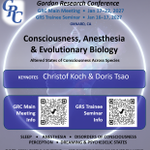
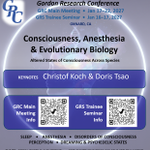
Applications are open! We have an *incredible* lineup of speakers at the 2027 GRC/GRS on Consciousness, Anesthesia and Evolutionary Biology - January 17-22, 2027 SoCal. Keynotes by Christof Koch, @doristsao (GRC) and @mattlark (GRS). see link below for the prelim program -
1
6
1
19
1,950
Boris D Heifets retweeted
New in Psychopharmacology: does the experience matter for ketamine? In 3,637 adults with depression, more intense psychedelic experiences went with greater improvement. Observational, but a sign the experience deserves careful measurement. doi.org/10.1007/s00213-026-0…
1
10
2
34
3,748
Boris D Heifets retweeted
An honor to receive a Discovery Award for interdisciplinary psychedelic science and scholarship. Led by prof Arielle Saiber & computer science colleagues, we will quantify extent to which psychedelic experiences are described similarly & differently across geography and history-
Johns Hopkins has committed nearly $300 million in new faculty awards to sustain research amid federal funding gaps. The announcement came as the university honored its 2026 Catalyst and Discovery Award recipients. bit.ly/3WK1Ivq
3
2
1
33
2,566
Boris D Heifets retweeted
My TED Talk is live! 🧠 I’m so excited to finally share this with you. What if letting go is the key to gaining control? The neuroscience of control, creativity, and flow—with a little help from Spock and Keith Richards. Full talk below👇 #TEDTalk #Neuroscience
8
9
4
66
16,394
Boris D Heifets retweeted
How does the brain give rise to conscious experience? That is the question we are building Astera Neuro to answer. Come see what we are working on, who we are, and how to join us. astera.org/neuroscience/
4
1
25
5,715
Boris D Heifets retweeted
How does matter become bright inside? I am deeply excited to share our vision @AsteraNeuro for understanding and engineering consciousness. We believe that perception and thought are constructed from fundamental building blocks, and that by understanding these blocks and how the brain combines them, we can explain the whole mystery of consciousness. Writing this vision statement helped me think more clearly about questions that have long bothered me: Why did consciousness evolve? What are we actually conscious of? What is the self? How do different parts of the brain work together? How can we tell whether an AI is conscious? What scientific path can lead to real answers? Part 1 presents a new theory. I propose that conscious experience arises from a coherent internal model of the world and the self built from 'persistent symbols.' I describe the neural representations and dynamics through which the brain could implement such symbols. Part 2 lays out a roadmap to systematically discover the basic building blocks of perception, cognition, and the self-model, and to build the neural read/write technologies and org culture we need to get there. Part 3 presents a dream: What will become possible once we acquire the ability to read and write experience--to truly engineer consciousness? If you are a systems neuroscientist who feels something fundamental is missing from our field, I share this feeling. Understanding the phenomenon that compelled many of us to become neuroscientists in the first place should be a central organizing goal of our field. This vision statement lays out a research program to reach this goal. If you read the vision statement and recognize that this is the mission you have been longing for, please get in touch, wherever in life you are right now. I made this stone soup for you. astera.org/understanding-and…
29
63
7
299
22,171
Boris D Heifets retweeted
The first completely on-site preclinical animal study from @JHPsychedelics. An immensely valuable collaboration with Division of Behavioral Biology. So grateful that I got to lead it and work with what can only be called the dream team! Unroll the tweet below for deets 📜
New paper led by @PraachiTiwari, a former postdoc in @TheYadenLab, now faculty at Div of Behavioral Bio & @JHPsychedelics (also w/ @CassieMoorePhD, Brian Jenkins, Elise Weerts, me). We examined how psilocybin affects a broader range of spontaneous behaviors in rats than HTR...
8
19
1,575
🏆 AWARD ANNOUNCEMENT – Society for Neuroscience Awards 2026 Next Generation Award to Uma R. Chatterjee, MS 🧠 The Society for Neuroscience (SfN), the world's largest organization of scientists and physicians devoted to understanding the brain and nervous system, with 30,000+ members across 95+ countries, has announced the recipients of its 2026 Science Education and Outreach Awards, to be honored at its annual meeting. “The Society is honored to highlight these dedicated neuroscientists who are committed to sharing science with the public and underserved communities in particular,” said @SfNTweets President Nicholas C. Spitzer, PhD. “The efforts of these Science Education and Outreach Award recipients have a lasting impact.” 2026 Next Generation Award – @UmaRChatterjee, MS, a doctoral student at @UWMadison, has made sustained, innovative, and highly impactful contributions to neuroscience communication, outreach, education, and public engagement. As a neuroscientist driven by her own lived experience, Chatterjee is committed to helping the people most affected by neuroscience research access accurate, understandable, and trustworthy explanations of that research. She has delivered more than 175 presentations worldwide, hosts the mental health science communication podcast 'A Chat with Uma,' reaching listeners in more than 125 countries, and helped create the award-winning 'OCD and the Brain,' a knowledge hub for people with obsessive-compulsive disorder (OCD), families, clinicians, researchers, and the public. Her work has reached broad audiences through platforms including Ologies, @NIH / NIMH, ABC, @NAMICommunicate, and @APA's Speaking of Psychology. Across these efforts, Chatterjee has helped individuals and families better understand symptoms and treatment options while encouraging scientists to think more deeply about public engagement, trust, accessibility, and lived-experience expertise. She is helping build a culture in which neuroscience communication and lived-experience engagement are viewed as necessary parts of rigorous, relevant, and impactful scientific practice. 🏆 JOIN US for the award presentation during the Presidential Special Lecture at #SfN26! ⬇️ 📅 Tues. Nov. 17, 2026 🕠 5:30 PM 📍 Walter E. Washington Convention Center | Hall D 🎥 Video and announcement: Society for Neuroscience #SfN26 #Neuroscience #SciComm #ScienceCommunication #MentalHealth #LivedExperience #RealOCD #MentalHealthAdvocacy #Psychiatry
5
3
15
1,043
Boris D Heifets retweeted
Joint effort by multiple labs looking at behavioral responses to psilocybin in mice - did not find replicable effects 24 h after. This is a great example of the type of preclinical research that should be more common, and actually drives progress forward! nature.com/articles/s41593-0…
1
1
16
1,559
Boris D Heifets retweeted
Our collaborative paper looking at acute and persistent effects of one dose of psilocybin in a range of mouse behavioral assays is out: rdcu.be/iiHBMSyDARWa. We learned a ton doing this with @TheBorisLab, @mazen_kheirbek plus the Gomez, Lammel and Malenka labs!
1
9
1
33
2,647
Boris D Heifets retweeted
A study we covered when it was a preprint is now published. 5 labs concluded: "psilocybin did not have replicable effects 24 h after administration in terms of reducing anxiety- and depression-like behaviors or facilitating fear extinction learning." nature.com/articles/s41593-0…
5
14
1
62
7,492
Boris D Heifets retweeted
Good summary of a seminal paper on the presumed effects of a psychedelic on animal behavior, showing the key results anchoring human mechanisms of change do not replicate in rigorous multi-lab testing.
Psychedelic research has surged again, with clinical trials for depression underway and a stream of mouse studies reporting that a single dose of psilocybin leaves lasting changes in the behaviors researchers use to model anxiety, depression and fear. A field headed for the clinic needs to know whether its findings reproduce. Lu and colleagues organized that test. Five independent laboratories gave the same dose of psilocybin under harmonized protocols, with deliberate room for the small differences that always exist between labs, and tested about two hundred male and female mice per experiment across the five labs. The acute effects were the consistent ones. Shortly after the dose, mice in every lab avoided open, exposed spaces more, a common read-out of anxiety-like behavior in rodents and froze less when reminded of a threat they had learned. The persistent effects were far harder to reproduce. In the following days there was no consistent reduction in anxiety- or depression-related behavior; fear extinction, where the animal learns that a once-threatening cue is now safe, was not reliably faster; and social preference showed no reproducible change. The celebrated reopening of a learning window for social reward in adult mice also failed to appear, though under a higher dose and a modified protocol than the original study, so it counts as a conceptual test rather than an exact repeat. The authors do not claim the lasting effects are absent. In their reading, those effects may be smaller than estimated, depend on particular conditions, or not be real. Last week I reviewed a paper showing that psilocybin remodels cortical synapses in mice and wrote that synaptic remodeling is not yet a therapeutic effect. These are different levels of evidence from different animals, and this collaboration measured the behavioral level, which is where reproducibility proved weakest.
1
2
6
537
Boris D Heifets retweeted
'...psilocybin’s reported persistent effects in mice may be modest and/or inconsistent' #psychedelics nature.com/articles/s41593-0…
3
5
16
3,815
Psychedelic research has surged again, with clinical trials for depression underway and a stream of mouse studies reporting that a single dose of psilocybin leaves lasting changes in the behaviors researchers use to model anxiety, depression and fear. A field headed for the clinic needs to know whether its findings reproduce. Lu and colleagues organized that test. Five independent laboratories gave the same dose of psilocybin under harmonized protocols, with deliberate room for the small differences that always exist between labs, and tested about two hundred male and female mice per experiment across the five labs. The acute effects were the consistent ones. Shortly after the dose, mice in every lab avoided open, exposed spaces more, a common read-out of anxiety-like behavior in rodents and froze less when reminded of a threat they had learned. The persistent effects were far harder to reproduce. In the following days there was no consistent reduction in anxiety- or depression-related behavior; fear extinction, where the animal learns that a once-threatening cue is now safe, was not reliably faster; and social preference showed no reproducible change. The celebrated reopening of a learning window for social reward in adult mice also failed to appear, though under a higher dose and a modified protocol than the original study, so it counts as a conceptual test rather than an exact repeat. The authors do not claim the lasting effects are absent. In their reading, those effects may be smaller than estimated, depend on particular conditions, or not be real. Last week I reviewed a paper showing that psilocybin remodels cortical synapses in mice and wrote that synaptic remodeling is not yet a therapeutic effect. These are different levels of evidence from different animals, and this collaboration measured the behavioral level, which is where reproducibility proved weakest.
2
8
2
49
4,377
Boris D Heifets retweeted
I didn't know what my colleagues would say when I met them this weekend. The ASA is a prestigious medical society. I didn't have research to present. I'm not even working in the operating room anymore. I have long COVID and I now work with people whose lives (like mine) have been impacted by the unexpected. I didn't need to worry. EVERYONE wanted to learn about long COVID. Almost everyone had been personally impacted or knew someone who had chronic illness or another health scare. As anesthesiologists, we are experts at saving bodies, but we don't talk about ways to save our own. Thank you @ASAMonitor and @LudwigLin for highlighting my story. There are more of us in this boat than you might think.
Dr. Zeest Khan shares her story of struggling with life-altering illness and the importance of claiming your identity instead of allowing a disease to define it. ow.ly/aWsy50ZWlX7 @LudwigLin
1
15
66
1,785
Boris D Heifets retweeted
This seems like a profound result that might be the first crack in the hull between us and a meaningful theory of consciousness. I go to these meetings hoping to witness key transitional periods that will be written about in 50 years. Don't miss your chance.
Seeing the excitement this has stirred up... the inimitable @doristsao will be delivering a keynote address at the 2027 GRC on Consciousness, Anesthesia & Evolutionary biology in January! *link below*. Applications closing soon- come see the greats debate!
1
10
661
Boris D Heifets retweeted
Can't speak for the GRC, but as GRS co-chair, we are currently not close to capacity, and we will prioritize early applications. We encourage posters, though, even if you don't think your work is related. Feel free to DM/email me if you want to discuss further.
1
1
2
133
Boris D Heifets retweeted
Can we have a show of hands from anesthesiologists who have already made their contribution to @FAERanesthesia #ANES26
As you enjoy A Day for New Researchers at #ANES26, we hope you’ll support #anesthesiology’s early-career investigators with a donation at FAER.org/AGC! A #FAERagc gift is a great way to support up-and-coming researchers, AND help your favorite department win! 🏆
2
5
1
10
901