U.S. Fish and Wildlife Service (@USFWS) header
U.S. Fish and Wildlife Service (@USFWS) profile picture

The U.S. Fish and Wildlife Service (USFWS) is dedicated to the conservation, protection, and enhancement of fish, wildlife, plants, and their habitats. 🐟🦆 🌱

Washington, DC
Joined July 2009
Photo by U.S. Fish and Wildlife Service (@USFWS)Photo by U.S. Fish and Wildlife Service (@USFWS)Photo by U.S. Fish and Wildlife Service (@USFWS)Photo by U.S. Fish and Wildlife Service (@USFWS)Photo by U.S. Fish and Wildlife Service (@USFWS)Photo by U.S. Fish and Wildlife Service (@USFWS)Photo by U.S. Fish and Wildlife Service (@USFWS)Photo by U.S. Fish and Wildlife Service (@USFWS)Photo by U.S. Fish and Wildlife Service (@USFWS)Photo by U.S. Fish and Wildlife Service (@USFWS)
American crows are among the smartest and most adaptable birds in North America. In the fall, they form large communal roosts, sometimes gathering hundreds to thousands of birds. These groups help them stay safe, alerting to predators. Photo: Courtney Celley/USFWS
24
76
6
554
9,122
The meadow vole is a small but mighty mammal that plays a key role in multiple ecosystems. Often mistaken for mice, these short-tailed rodents build tunnels under grasses and snow to stay warm and forage for seeds. They remain active all winter and are an important food source for owls, foxes and more. Photo: Brian Henderson/CC BY-NC 2.0 flic.kr/p/29tvRsK
7
35
307
6,117
The kit fox is a small desert fox native to arid regions of the western United States. With oversized ears and sandy coats, they're built for life in dry, open landscapes. Though shy and nocturnal, they play a vital role in controlling rodent populations and maintaining desert balance. Photo: Keith Kohl/Oregon Department of Fish and Wildlife
16
60
2
619
8,613
U.S. Fish and Wildlife Service proposes federal protections for the Mazama newt under the Endangered Species Act. This amphibian is only found in Crater Lake National Park and faces threats from nonnative species. For more information: ow.ly/lYyr5108gYp Photo courtesy of © Oregon Zoo/photo by Michael Durham
9
58
5
393
7,561
An ominous storm is brewing on the horizon at Neal Smith National Wildlife Refuge, bringing a dramatic close to the day.   USFWS video of a storm front moving across the landscape with prairie in foreground and ending with a small elk herd, courtesy of Joan Van Gorp
3
20
205
7,900
U.S. Fish and Wildlife Service retweeted
Can’t talk right now. Birdwatching in GTA VI.
94
936
78
12,443
269,292
A rare visitor touched down on Cape Cod last week! A crested caracara, a raptor more commonly found in the southern United States, Mexico, and Central America, was recently spotted at Monomoy National Wildlife Refuge in Massachusetts. Far from its typical range, this striking bird is turning heads among birders and wildlife enthusiasts alike. Sightings like this highlight the incredible journeys birds can make and remind us that migration and dispersal can sometimes lead wildlife to unexpected places. Keep your binoculars handy!! Have you had any unexpected visitors lately? USFWS photo of a crested caracara courtesy of Grace Bottitta.
21
89
6
855
14,067
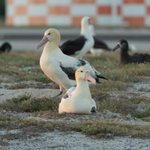
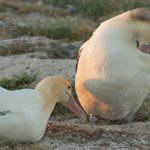
🥚👀 We have eyes on egg! An endangered short-tailed albatross laid a very important egg last week on Midway Atoll National Wildlife Refuge! The birds are called makalena in Hawaiian, and the lone breeding pair (so far) on the remote refuge are affectionately named George and Geraldine. This is their 10th straight year reuniting on Midway Atoll NWR, on the outer northwest edge of the Hawaiian archipelago. They were first seen in 2016 and had their first chick together in the 2018-2019 breeding season. They did not have an egg last season.
8
111
4
1,033
16,191
The vast majority of breeding for short-tailed albatross occurs on remote islands in the western Pacific, including Torishima Island, Japan, and the Senkaku Islands near Taiwan. George and Geraldine were both banded as chicks on Torishima. Short-tailed albatross are much larger than their albatross neighbors on the refuge and stand out with their light pink bills. They are vastly outnumbered, too. Last season, seven makalena visited Midway Atoll NWR, whereas a recent count of Laysan albatross nests on the atoll was well over 600,000.
1
3
54
2,134
Millions of makalena once used their long wingspans to expertly glide on air currents across the northern Pacific Ocean, from Japan to Alaska and Hawaiʻi; but at the turn of the 20th century, their population was decimated by feather hunters. The seabird was listed by the USFWS as endangered in 2000 and the slowly growing population is estimated at around 10,000 today. Stay tuned for more updates from Midway Atoll NWR! USFWS volunteer photos: Dan Rapp
2
47
1,528
The bordered mantis is a native praying mantis found across the western U.S., known for its green or tan color and ambush skills. This time of year, females are laying foam-like egg cases. In the spring, tiny mantises will hatch. Photo: J. N. Stuart/CC BY-NC-ND 2.0 ow.ly/jtlG5104icw
5
21
1
220
4,468
The red drum is a saltwater sport fish found along the Gulf and southern Atlantic coasts. They have a distinct black spot near the tail. This time of year, these fish are finishing spawning and shifting to deeper coastal waters. Photo: USFWS
9
9
107
4,323
The pumpkinseed is a colorful freshwater sunfish with vivid orange, blue and green markings. In the fall, pumpkinseeds become less active, moving to deep, calm waters as temperatures drop and their metabolism slows. They spend winter in a near-dormant state, conserving energy until spring returns. Photo: Smithsonian Environmental Research Center
18
65
3
555
12,940
The northern mockingbird is a mimic master - able to copy the songs of dozens of other birds - plus car alarms, frogs and even ringtones! Found across much of the U.S., these birds defend territory year-round and guard winter food sources. USFWS photo by Anna Weyers Blades
11
52
6
405
7,061
This is what 2 million seabirds look and sound like. Last month the massive colony of bonin petrel, or nunulu in Hawaiian, returned to Midway Atoll National Wildlife Refuge in the central Pacific Ocean for nesting season. A very rough population estimate for the nocturnal feeders is that there are over 300,000 breeding pairs of bonin petrel on Midway Atoll NWR, translating to approximately 2.4 million birds in total when accounting for non-breeding individuals.
5
57
5
281
7,951
The small, burrow-nesting seabird was once in jeopardy due to the accidental introduction of rats on Midway in the 1940s. Rat eradication efforts in the 1990s allowed the bonin petrel to bounce back. Egg laying usually begins in January with hatching starting around March. USFWS volunteer video: Dan Rapp Video description: The night sky, illuminated over the ocean by the large moon, is filled with seabirds flying in all directions, with the rhythmic ocean below.
3
1
18
1,311
The wheel bug is one of the largest assassin bugs in North America. It can easily be identified by the wheel-like crest on its back. They use needle-like beaks to inject venom that liquifies the insides of insect prey. In the fall, females lay eggs on twigs or bark that hatch in spring. USFWS photo by Anna Weyers Blades
7
12
130
4,323
Fall marks a turning point for Atlantic tarpon - a legendary sport fish known for its massive jumps and raw power. As water temperatures drop, tarpon migrate to warmer waters. If you're fishing for tarpon, be ready to work for it! Photo: Kevin Bryant/CC BY-NC-SA 2.0 flic.kr/p/2m15W5P
6
9
91
3,165
Happy Veterans Day! Today we honor our veterans and make sure we never forget their dedication and sacrifice. At the U.S. Fish and Wildlife Service, we're fortunate to work alongside many veterans who continue to serve our country by safeguarding its natural treasures. Photo: Gordon Garcia
13
93
1
442
5,466
Eastern carpenter bees are large, shiny pollinators often mistaken for bumblebees. As temperatures drop, activity winds down and these bees seek shelter to overwinter, often in the tunnels they carved into wood in the spring. Mated females hibernate alone in nests, waiting to re-emerge when warmth returns. Photo: Judy Gallagher/CC BY 2.0 flic.kr/p/2o78Bsq
10
37
1
220
5,019