Aws Albarghouthi (@awsTO) profile picture

Member of the load-bearing staff

Joined October 2009
Photo by Aws Albarghouthi (@awsTO)Photo by Aws Albarghouthi (@awsTO)Photo by Aws Albarghouthi (@awsTO)Photo by Aws Albarghouthi (@awsTO)Photo by Aws Albarghouthi (@awsTO)Photo by Aws Albarghouthi (@awsTO)Photo by Aws Albarghouthi (@awsTO)Photo by Aws Albarghouthi (@awsTO)Photo by Aws Albarghouthi (@awsTO)Photo by Aws Albarghouthi (@awsTO)
Aws Albarghouthi retweeted
ted chiang called it i'm afraid
Someone out there needs to start the Journal of Mathematical Hermeneutics, which is explicitly devoted to human-written interpretations and expositions on AI-generated proofs.
9
140
10
1,513
42,905
Aws Albarghouthi retweeted
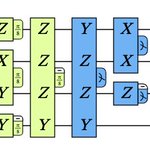
Quantum computers could one day transform fusion energy, chemistry, and drug discovery - if we can make the algorithms efficient enough to run on early hardware. Using teams of Gemini 4 agents, we’ve built new quantum circuits that cut future simulation costs by up to 10 times.
283
510
218
4,346
300,738
Aws Albarghouthi retweeted
Thanks for having me! Was a great discussion on what the current state is and what the future holds!
1
2
16
577
Aws Albarghouthi retweeted
Emergent Behaviors with Gabe Orlanski, creator of SlopCodeBench: 🦄 AI That Works #81 www.teapaw.org/i/broadcasts/2WXPoPRqB…
2
6
3
55
9,063
i’m increasingly of the opinion that almost everyone agrees with this, but a big fraction of people aren’t comfortable saying it in public, because of what it implies for the bean counting mechanism the whole machine is built on (for awards/promo/hiring/etc).
I am increasingly of the opinion that the academic paper is no longer a good medium for disseminating CS research. I think we should move to (1) blog posts and (2) books.
14
21
13
371
98,972
Aws Albarghouthi retweeted
Any neurosymbolic tool developed today will be replaced with a better fully neural approach next year. Discuss
8
2
26
Aws Albarghouthi retweeted
insane alpha dump from @GOrlanski - slop code bench updates based on the Super fun working with the SCB team to run some of these benchmarks to support this research!
A few weeks ago, @dexhorthy released a great blog on how frontier agents performed on SlopCodeBench. Now, slop is moving up the stack and destroying your codebase with duplicate code.
4
4
48
6,992
Aws Albarghouthi retweeted
More concerningly, we see agentic slop moving higher up the stack. ESPECIALLY around library usage, where some agents choose to reimplement entire libraries, even when they can install them.
1
1
15
665
Aws Albarghouthi retweeted
A few weeks ago, @dexhorthy released a great blog on how frontier agents performed on SlopCodeBench. Now, slop is moving up the stack and destroying your codebase with duplicate code.
6
22
3
101
12,776
Aws Albarghouthi retweeted
Announcing a major milestone achieved by my team @GoogleDeepMind: we have proven key security properties of the machine code underlying the Signal messaging protocol. This is the first time the actual production code of a widely deployed protocol has been formally verified – by any method, with or without AI – and at this depth. More than a research breakthrough, it’s a prime example of how frontier AI can be a force multiplier to counter the speed and scale of modern cyber threats. Formal verification offers a higher standard of security; however, it’s extremely complex and time consuming, which is why in many cases it’s considered to be impractical. Similar efforts could take teams decades of combined effort. We did it in a month’s time. Using AlphaProof Code, Google DeepMind's new agentic framework for formal verification that runs on LLMs including Gemini Carbon, we verified the Signal protocol down to the actual code running on devices.  This milestone lays the groundwork for a future in which vital systems, from medical device firmware to power grid software, ship with mathematical proof that their protections work. Reaching that future will take continued research from our community. In that spirit, we're open-sourcing our formal specifications and verification artifacts so others can build on this work. On a personal note, this moment is of deep significance to me. I started my own research journey more than two decades ago as an intern working on checking the consistency of complex software systems. Seeing this grand challenge made practical with modern AI is extraordinary. I'm extremely proud of my team members: Swarat Chaudhuri, Andrew Ferraiuolo, Anton Kovsharov, Tej Chajed, Sam Schlesinger,  Karn Seth, Jonathan Katz, and Charles Sutton for taking on this grand challenge and delivering, and grateful to the Signal team for their partnership. deepmind.google/blog/formal-…
234
700
238
5,843
609,368
Aws Albarghouthi retweeted
Ah, another beautiful question in quantum complexity theory solved! This one is due to Scott Aaronson and @AAmbainis, about the necessity of structure in a problem for exponential quantum advantage. This question inspired a lot of research and we collectively learned a lot about quantum computing from it. The problem seemed ripe; this year it felt like we were closing in on it. The most recent (human-written) papers on it had solved special cases showing that parallel quantum algorithms cannot achieve exponential speedups for unstructured problems. What is the next beautiful question in quantum algorithms that will spur another generation of learning and understanding? * Guy Blanc, Jordan Docter, Carmen Strassle and Li-Yang Tan, Quantum Speedups Require Structure or Depth (arxiv.org/abs/2608.19158) * Qipeng Liu, Saachi Mutreja (my fantastic student!), Parallel Quantum Advantage with Limited Adaptivity Requires Structure (arxiv.org/abs/2608.20297)
Today Physical Superintelligence PBC is announcing a proof of the Aaronson-Ambainis conjecture, one of the central open problems in quantum complexity, with major implications for quantum computing speedup. psi.inc/research/aaronson-am… Thread 👇
7
41
5
182
22,070
Aws Albarghouthi retweeted
Happy to announce that our FV Job Board now has a RSS 2.0 feed! Now you can follow the newest job updates through your favorite RSS feed reader. typetheoryforall.github.io/F… As always, this is a community project and job updates and PRs are very welcome!
8
3
69
15,200
Aws Albarghouthi retweeted
I'm thrilled to bring &Truth out of stealth as its co-founder and Chief Science Officer. With a team I'm proud to be part of, we're setting out to specify and prove all the world's software correct and secure. If you geek out over code people can understand and trust, join us!
We are out of stealth! As AI writes more code, we're building tools to prove programs meet precise requirements, with Lean proofs anyone can independently check. Let's make verified software the norm in every language and application. Come take a look: andtruth.com
25
49
8
496
26,898
An internal model at OpenAI has produced a claimed refutation of ETH! Russell Impagliazzo, Mohan Paturi, and I have been asked to help organize an open and independent examination of this claim. 1/4
303
770
544
7,412
3,779,830
Aws Albarghouthi retweeted
The bitter lesson of ML is that scale eats all. The bitter lesson of PL is that [efficient] brute force eats all.
The results from Anthropic + Theorem feel like a “bitter lesson” moment for formal verification. They just went for semantics-level proofs. No fancy program logics, proof techniques or algorithms. Just bare metal proofs with a vanilla Hoare logic over RISC-V.
4
17
3
112
7,002
Aws Albarghouthi retweeted
in 1948, Turing introduced "unorganized machines", machines that learn, which we now call neural nets. in 1949, in "Checking a large routing", Turing introduced formal verification (Floyd-Hoare triples). Today, neural nets do formal verification. Pretty wild.
2
30
1,734
Aws Albarghouthi retweeted
This seems like a good time to remind everyone that northeastern is hiring tenure track faculty in formal methods and ai. Apply!
2
3
272
Aws Albarghouthi retweeted
We should rebrand Formal Verification to Proof Against the Machine
1
7
59
2,075
Aws Albarghouthi retweeted
I've discovered that all popular quantum computing SDKs / compilers have serious bugs when it comes to handling angles -- floating point strikes again! IBM's Qiskit, Google's Cirq, Rigetti's quilc, IQM's Qrisp, NVIDIA's CUDA-Q, Xanadu's PennyLane, qBraid's SDK, ... 🧵1/n
3
1
29
1,955