

The funder-researcher collaboration and open-access journal for research in the life and biomedical sciences | @eLifeCommunity
Cambridge, UK
Joined September 2011
- Tweets26.4K
- Following692
- Followers177K
- Likes12.5K





Integration of ATAC- and RNA-sequencing identifies chromatin and transcriptomic signatures in classical and non-classical zebrafish osteoblasts and indicates mechanisms of <i>entpd5a</i> regulation
elifesciences.org/articles/1…

Tracking West Nile virus dynamics using viral loads from trapped mosquitoes
elifesciences.org/articles/1…
4
2,412
In this study the authors carry out transcriptomic and epigenomic experiments to study open chromatin regions and transcripts that change upon larval settlement in the sponge Amphimedon.
elifesciences.org/articles/1…
1
3
2,725
Light-entrained chromatin priming poises rapid metamorphosis in a marine sponge
elifesciences.org/articles/1…
1
2,503
Open source laser-scanning photostimulation for neuroscience with Zapit
elifesciences.org/articles/1…

Small brown planthopper infestation enhances it reproduction and insecticide tolerance by manipulating glucose distribution and levels in rice
elifesciences.org/articles/1…
1
4
3,993
Heterogeneous responses to embryonic critical period perturbations within the Drosophila larval locomotor circuit
elifesciences.org/articles/1…
7
3,931
The transcription factor BCL11A restores differentiation potential to aged oligodendrocyte progenitor cells
elifesciences.org/articles/1…
SARS-CoV-2 main protease inhibition through dimerization promotion by peptidomimetic inhibitors and disruption by ebselen
elifesciences.org/articles/1…
2
3,108
Genetic canalization of nutrient resorption in the widespread grass Phragmites australis under salt stress
elifesciences.org/articles/1…
2
3,178
Improved cryo-EM reconstruction of sub-50 kDa complexes using 2D template matching
elifesciences.org/articles/1…
Mid-zone hepatocytes trade proliferation for survival via Atf4-Chop axis in early acute liver injury
elifesciences.org/articles/1…
5
3,136
What does it mean to be AI?
elifesciences.org/digests/10…
1
2,199
Looking for a home for your neuroscience paper?
We welcome research in all areas of neuroscience, including brain function, neuronal circuits, synapses, sensory processing, and motor pattern generation.
Take a look at what we publish ⬇️
elifesciences.org/subjects/n…

ALT Three researchers in lab coats stand on a giant brain while a sky of connected stars and constellations evokes mapping neural networks.
Modulation of human dorsal root ganglion neuron excitability by Nav1.7 inhibition
elifesciences.org/articles/1…
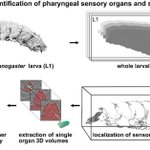
Morphology and ultrastructure of pharyngeal sense organs of Drosophila larvae
elifesciences.org/articles/1…
Mapping the topographic organization of the human zona incerta using diffusion MRI
elifesciences.org/articles/1…
1,391
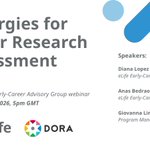
📅 Coming up this Monday, 23 November, 5pm GMT.
Hear from the eLife Early-Career Advisory Group and DORA on fair research assessment, and how early-career researchers can take action.
Not registered yet? Sign up here ⬇️
us02web.zoom.us/meeting/regi…

This landmark study is part of a large-scale effort to assess the consistency of published findings in Drosophila immunity.
The conclusions on the consistency of the claims, as presented in this paper, are based on mostly convincing evidence.
elifesciences.org/reviewed-p…

ALT Project timeline showing milestones from collecting 400 papers and annotating claims, through verification, experimental testing, database creation and the ReproSci website launch, to data analysis, publications (2025–26), and continued community participation.
Reporting on an analysis of claims made in approximately 400 research papers from Drosophila immunity literature, the authors perform validation experiments to test a subset of the claims that are most inconsistent with current understanding.
1
2
818