
Increase your sense of wonder. (Author of 50 books & 800 patents. Yale Ph.D.) "Pickover contemplates realms beyond our known reality." ~NY Times
New York
Joined September 2008
- Tweets83.9K
- Following50
- Followers236K
- Likes2.2K



Pinned Tweet
Ask me anything.
I will be happy to answer some of your questions, and will try to reply to a portion of your questions below in the coming days.

This article caught my eye today: some of the earliest proto-science fiction came from the Islamic Golden Age, a period of major cultural and scientific flourishing in the Islamic world.
In the 12th century, Ibn Tufail wrote Hayy ibn Yaqdhan, a philosophical thought experiment about a boy raised by a gazelle on a desert island who discovers science and reason from scratch: a tale that later helped inspire Robinson Crusoe.
What's your favorite example of surprisingly early sci-fi?
Article: gizmodo.com/the-islamic-root…

Mathematics.
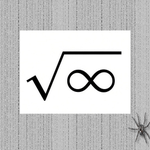
A mathematician emerges from a cave, hands you the slip of paper below, and asks "What is √∞? Unlike sin(∞), this one actually behaves. Mostly. Why?" What is your response?


Experienced teachers: What is one concrete thing a brand-new teacher can do tomorrow morning that sounds counterintuitive (or almost rule-breaking) but actually works?


I'm in love with the "low-light paintings" of John Atkinson Grimshaw (1836–1893). This is "Glasgow, Saturday Night." What's your favorite low-light painting?

This is a math joke involving talking penguins.
Adapted from tinyurl.com/yc6u6s44

Visualization of the Riemann Proof looks like the nervous system of an invertebrate. A map of 17 million lines of Lean. A 167-year-old question.

Tracing the spine of a 17m-line machine proof, and the tendrils that compile but go nowhere. #RiemannHypothesis

Dreams are what happens when your brain runs a local simulation on cached memories, with the live connection to the present turned off.

Behold the human inner ear. It's amazing to realize that this naturally appeared, after billions of years, from the quark-gluon plasma of the Big Bang. The universe somehow taught matter how to build a microscopic gyroscope and a spiral acoustic harp.

Mathematics.
The Lucas Spiral, made with quarter-arcs, is a good approximation of the golden spiral when its terms are large. (The sequence of Lucas numbers is: 2 , 1 , 3 , 4 , 7, 11, 18, 29, 47, 76, 123...) Source: tinyurl.com/y7rz7mn7

You have two buttons, and you can only press once:
🟢 Raise the IQ of the bottom 50% of the US population by 10 points.
🔴 Raise the IQ of the top 10% of the US population by 10 points.
Which one do you press, and why?

Math, physics, astronomy, reality.
Everything in the universe in one graph. A glimpse into the mind of "God."
Source: pubs.aip.org/aapt/ajp/articl…
Figure legend: "Masses, sizes, and relative densities of objects in our Universe…. Gravity and quantum uncertainty PREVENT objects of a given mass from being smaller than their corresponding Schwarzschild radius or Compton wavelength...
Our Universe is represented by the “Hubble radius” and has a mass and size that places it on the black hole line, seemingly suggesting that our Universe is a massive, low-density black hole.... (cc by 4.0)

This humor combines math and AI.
Adapted from a meme circulating widely on the Web (r/singularity): tinyurl.com/4t6mhezb

Geology. A relationship with this much tension is bound to shake things up.
Share the joke with your kids if it cracked you up (or caused a minor tremor).

“Physicists have come to realize that mathematics, when used with sufficient care, is a proven pathway to truth.”
― Brian Greene, The Fabric of the Cosmos

Mathematics: Triangle of the Gods.
One prime in this cascading number tower unlocks the afterlife. How far down do you have to look?

“Pray tell us, what’s your favorite number?”...
“Shiva jumped up to the board, uninvited, and wrote 10,213,223”... It is the only number that describes itself when you read it, ‘One zero, two ones, three twos, two threes’.”
~ Abraham Verghese, Cutting for Stone

Free Math Book.
"How We Got from There to Here: A Story of Real Analysis." Introduces students to difficult definitions by including historical developments. An intro analysis textbook. Students solve problems that include historical context.
Contents
Prologue: Three Lessons Before We Begin
I: In Which We Raise a Number of Questions
1 Numbers, Real (R) and Rational (Q)
2 Calculus in the 17th and 18th Centuries
2.1 Newton and Leibniz Get Started
2.1.1 Leibniz’s Calculus Rules
2.1.2 Leibniz’s Approach to the Product Rule
2.1.3 Newton’s Approach to the Product Rule
2.2 Power Series as Infinite Polynomials
3 Questions Concerning Power Series
3.1 Taylor’s Formula
3.2 Series Anomalies
II Interregnum
Joseph Fourier: The Man Who Broke Calculus
III In Which We Find (Some) Answers
4 Convergence of Sequences and Series
4.1 Sequences of Real Numbers
4.2 The Limit as a Primary Tool
4.3 Divergence
5 Convergence of the Taylor Series: A “Tayl” of Three Remainders
5.1 The Integral Form of the Remainder
5.2 Lagrange’s Form of the Remainder
5.3 Cauchy’s Form of the Remainder
6 Continuity: What It Isn’t and What It Is
6.1 An Analytic Definition of Continuity
6.2 Sequences and Continuity
6.3 The Definition of the Limit of a Function
6.4 The Derivative, An Afterthought
7 Intermediate and Extreme Values
7.1 Completeness of the Real Number System
7.2 Proof of the Intermediate Value Theorem
7.3 The Bolzano-Weierstrass Theorem
7.4 The Supremum and the Extreme Value Theorem
8 Back to Power Series
8.1 Uniform Convergence
8.2 Uniform Convergence: Integrals and Derivatives
8.2.1 Cauchy Sequences
8.3 Radius of Convergence of a Power Series
8.4 Boundary Issues and Abel’s Theorem
9 Back to the Real Numbers
9.1 Infinite Sets
9.2 Cantor’s Theorem and Its Consequences
Epilogue
Epilogue: On the Nature of Numbers
Epilogue: Building the Real Numbers
The Decimal Expansion
Cauchy sequences
Dedekind Cuts
Link: milneopentextbooks.org/how-w…

